Remi Wolf’s MUD: Growing Up Is a Messy Business


Remi Wolf’s MUD: Growing Up Is a Messy Business
Remi Wolf’s MUD: Growing Up Is a Messy Business
On her third album, Remi Wolf turns down the colour and faces sobriety, loneliness and self-sabotage. MUD is an uneven but revealing shift from her usual exuberance.
Remi Wolf has built a career out of making emotional chaos sound like a good time. On Juno and Big Ideas, heartbreak, desire and self-sabotage arrived wrapped in wonky basslines, bright colours and a kind of theatrical absurdity that made even the worst decisions feel worth celebrating. MUD, her third album, released on 9 October 2026, is a different proposition. The colours are less saturated, the guitars more prominent, and the jokes no longer arrive quickly enough to distract from the feelings underneath.
Following a difficult breakup and years spent touring, Wolf sounds tired of outrunning herself. Across eleven tracks, she writes about sobriety, loneliness, emotional avoidance and the rather unpleasant realisation that knowing what is wrong with you does not necessarily make it easier to change. The album is not always successful in translating these experiences into music, but its willingness to sit with discomfort makes it one of her more revealing records.

The trouble with being self-aware
Bottle, the opening track, establishes the album's emotional register. Its restrained production gives Wolf's voice room to move between exhaustion and determination as she confronts her relationship with alcohol. There is no grand declaration of recovery here, just the negotiation that happens when you know what you should do and find yourself looking for reasons not to do it.
This is what makes the song so affecting. Popular culture tends to frame personal transformation as a clean break between a troubled past and a better future. Real life is rarely so accommodating. You can recognise your patterns, understand where they come from and still find yourself repeating them. Wolf makes that contradiction the subject rather than something to resolve before the song ends.
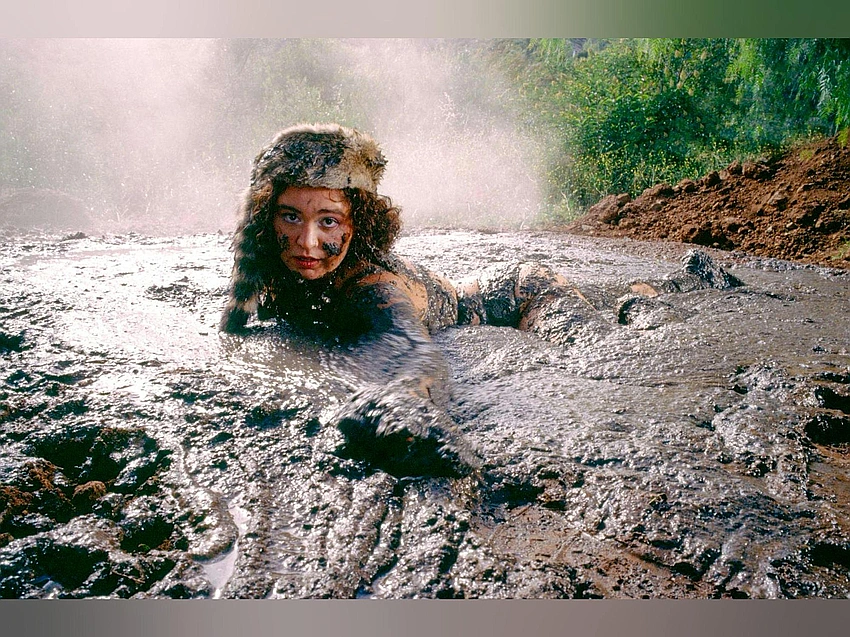
The album's title is apt. Mud is unpleasant, difficult to move through and impossible to avoid getting on yourself. But it is also something you can emerge from. The image of Wolf covered in sludge on the album artwork captures this ambivalence rather well: she looks faintly ridiculous, but there is something liberating about the trying to emerge from the experience looking pristine.

Making a fool of yourself
Twiggy is an interesting example. Its resentment towards an emotionally unavailable ex is delivered with the kind of sharp, unfiltered frustration that makes a breakup song satisfying. Yet there is something almost embarrassing about how much energy Wolf continues to give someone who has already disappointed her. The song understands that getting over somebody is not always a dignified process. Sometimes you need to say something unkind, repeat it several times and hope that eventually you believe yourself.
Then there is Covered in Mud, arguably the album's centre of gravity. Wolf turns down the possibility of a romantic encounter in favour of staying home with cheap wine and television. It is a small, ordinary decision, but one that captures the difference between wanting intimacy and having the energy to participate in it. There is no dramatic heartbreak here, just the comfort of avoidance and the suspicion that you might be making your own life smaller.
This tendency towards self-sabotage is central to the record. I find it more interesting than a straightforward account of recovery because Wolf does not position herself as the hero of her own story. She can recognise that she is getting in her own way and still choose the familiar disappointment over the risk of something new.
When the music lets her down
The shift towards acoustic guitars, country-rock textures and live instrumentation gives MUD a warmth that suits its subject. Burn Me Blue makes particularly good use of Wolf's raspy, elastic vocals, while I Won't Cry allows heartbreak to unfold without the usual layers of sonic distraction. On Jamie, she stretches a memory of lost love into something almost theatrical, reminding us that the extravagant performer of Juno has not disappeared entirely.
Not everything lands. The album's second half occasionally settles into predictable arrangements, and Moon So High, featuring John Mayer, feels more conventional than the material surrounding it. When the production becomes too familiar, her voice has to carry the entire emotional weight, and not every song gives it enough to work with.
There is no clean way out
What stays with me about MUD is its refusal to make growing up look particularly elegant. Wolf's struggles are not neatly resolved by the final track, nor does the album pretend that recognising a problem is the same as overcoming it.
That is ultimately its strength. MUD is less immediately thrilling than her earlier work, and it occasionally mistakes earnestness for depth. But at its best, it captures the awkward period when old habits no longer serve you and new ones have yet to take hold. You are still making mistakes, still avoiding difficult conversations, still figuring out what it means to take care of yourself.
Sometimes the most honest thing an album can offer is not a way out, but the feeling that somebody else is still trying to find one.

Login to comment.