#SelfDiscovery
Your gift has a receiver: Your unique gifts may be exactly what someone else is waiting for. #ShareYourGifts #FollowYourExcitement #SelfDiscovery
Login to reply.
14 Replies
Mel robbins: quarantine realizations: Mel opens up on lockdown stillness, facing her fears, and what she really wants. #MelRobbins #QuarantineReflections #SelfDiscovery
Mel robbins: quarantine realizations:
Mel opens up on lockdown stillness, facing her fears, and what she really wants.
Login to reply.
12 Replies
Two decades after Eat Pray Love, critics ask whether turning personal healing into a marketable blueprint makes travel feel more marketing than meaning. A fresh take on a beloved memoir. Few books have shaped the modern imagination of self discovery quite likeEat Pray Love. Elizabeth Gilbert's 2006 ... Read full article.
Eat Pray Love and the Promise of Reinvention
Two decades after Eat Pray Love, critics ask whether turning personal healing into a marketable blueprint makes travel feel more marketing than meani…
Eat Pray Love and the Promise of Reinvention
Two decades after Eat Pray Love, critics ask whether turning personal healing into a marketable blueprint makes travel feel more marketing than meani…
Two decades after Eat Pray Love, critics ask whether turning personal healing into a marketable blueprint makes travel feel more marketing than meaning. A fresh take on a beloved memoir.
Few books have shaped the modern imagination of self discovery quite like Eat Pray Love. Elizabeth Gilbert's 2006 memoir, and its subsequent film adaptation, popularised the idea that leaving everything behind, travelling across continents, and eventually finding love could heal a fractured self. It became more than a memoir. It became a cultural script.
Yet nearly two decades later, that script feels increasingly fragile. This is not because Gilbert's experiences were dishonest or meaningless. They were her own. The problem begins when a deeply personal memoir is treated as a universal roadmap. Somewhere between Italy's abundance, India's spirituality, and Bali's romance, self discovery became something that looked remarkably marketable.
Perhaps the question is no longer whether Eat Pray Love is inspiring. It is whether we have misunderstood what healing actually demands.

Travel changes scenery, not psychology
The appeal of travel as transformation is understandable. New places interrupt familiar routines. They create enough distance to reflect on the life left behind. Anthropologists and psychologists alike have noted that travel can encourage new perspectives and greater self awareness.
But travel is rarely a substitute for emotional work.
One of the recurring criticisms of Eat Pray Love is that movement is often presented as if it naturally produces healing. In reality, unresolved grief, anxiety, loneliness, or trauma tend to travel with us. Airports cannot confiscate emotional baggage.
This is perhaps why so many people experience what psychologists sometimes describe as post holiday disappointment. Returning home often means confronting the same relationships, responsibilities, and habits that existed before the journey. The landscape changes more quickly than the self.
Gilbert's memoir occasionally acknowledges this complexity. Meditation in India is difficult rather than miraculous. Growth arrives through repetition and discomfort rather than instant enlightenment. Yet popular culture distilled the story into something much simpler: buy the ticket, find yourself.
That simplification has proven far more influential than the memoir's quieter moments.

The privilege behind reinvention
There is another conversation that has become impossible to ignore.
The freedom to abandon one's life for a year is not universally available. It depends on financial security, professional flexibility, passports, and the ability to move across borders with relative ease. Critics have argued that Eat Pray Love reflects a form of privileged mobility, where self actualisation becomes accessible primarily to those who can afford it.
This does not invalidate Gilbert's journey. Personal stories are not required to represent everyone.
However, it does remind us that narratives of healing are never socially neutral. The ability to disappear into another country for reflection is itself shaped by class, nationality, and economic circumstance. When these realities disappear from view, reinvention begins to resemble consumption. Destinations become emotional products rather than places with histories and communities of their own.

Romance is not the final chapter
The final movement of Eat Pray Love ends with romance. After months of personal searching, Gilbert meets Felipe in Bali, and love appears almost as a reward for inner growth.
There is undeniable emotional satisfaction in this ending. Stories often seek closure, and romance remains one of our favourite forms of narrative completion.
Real life is rarely so orderly.
Relationships can enrich a person's life, but they cannot permanently resolve insecurity or loneliness. Expecting romance to complete an unfinished self places impossible expectations on both partners. Contemporary psychology consistently suggests that healthy relationships depend upon emotional resilience rather than replacing its absence.
Ironically, one of the strongest ideas buried within Gilbert's memoir is that solitude matters. Learning to exist independently is not simply preparation for romance. It is valuable in itself. Unfortunately, the cultural memory of Eat Pray Love often remembers the love story more vividly than the solitude that preceded it.

A story, not a prescription
None of this means Eat Pray Love deserves dismissal.
Gilbert wrote a memoir, not a psychological handbook. The problem emerged when publishers, audiences, and wellness culture transformed one woman's experience into a blueprint for happiness. The memoir became entangled with a booming self help industry that frequently promises transformation through consumption, whether that means buying retreats, booking flights, or chasing aesthetic lifestyles.
Perhaps the lasting lesson of Eat Pray Love is the opposite of the one most often repeated.
Travel can expand our imagination, but it cannot perform therapy. Romance can accompany healing, but it cannot replace it. Real change is slower, quieter, and considerably less cinematic than social media or bestselling memoirs often suggest.
The most difficult journey is rarely the one across countries. It is the one that continues after we return home, when there are no postcards left to collect and no new city waiting to reinvent us.
#EatPrayLove #SelfDiscovery #TravelCulture #MemoirCritique #CulturalCommentary

Login to comment.
5 Thots
More Like This
not convinced...sticking through can build resilience. #selfdiscovery
Login to reply.
No thots yet. Be the first to share your thoughts!
Login to reply.
No thots yet. Be the first to share your thoughts!
I've felt this too, not about me, but about others moving on. #selfdiscovery
Login to reply.
No thots yet. Be the first to share your thoughts!
could be helpful for anyone going through changes. #selfdiscovery
Login to reply.
No thots yet. Be the first to share your thoughts!
Login to reply.
No thots yet. Be the first to share your thoughts!
Login to reply.
No thots yet. Be the first to share your thoughts!
Your vibe attracts people: Your vibe shapes who you attract; grow and find healthier bonds. #growthmindset #selfdiscovery #personaldevelopment
Your vibe attracts people:
Your vibe shapes who you attract; grow and find healthier bonds.
Login to reply.
14 Replies
Who's leaving you?: It happens. Growth can feel lonely, but true friends stay. Keep growing. #growthmindset #lifetransformation #selfdiscovery
Who's leaving you?:
It happens. Growth can feel lonely, but true friends stay. Keep growing.
Login to reply.
14 Replies
Walk away, find your path: Walking away from the wrong path can be brave—choose the path that fits you. #PathToGrowth #SelfDiscovery #MindsetShift
Walk away, find your path:
Walking away from the wrong path can be brave—choose the path that fits you.
Login to reply.
14 Replies
Let go, fight club A tense moment about letting go and finding calm. #LetGo #FightClub #SelfDiscovery
Let go, fight club
A tense moment about letting go and finding calm.
Login to reply.
1 Reply
How Your Rising Sign Influences Your Vibe
Your rising sign shapes your identity and first impressions. Discover the importance of the Ascendant for a deeper connection with yourself and other…
Your rising sign shapes your identity and first impressions. Discover the importance of the Ascendant for a deeper connection with yourself and others.
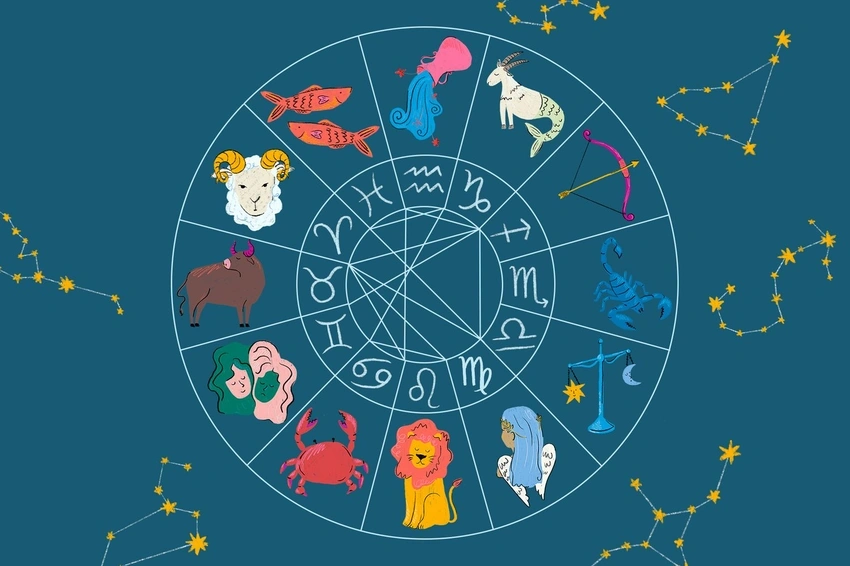
In astrology, your rising sign (also called the Ascendant) is the sign that was rising on the eastern horizon the moment you were born. While your Sun sign shows your core identity and your Moon shows your emotions, your Rising sign is your mask, your first impression, your “vibe.”
Astrology Rising Signs
Gen-Zers live online, meet people through screens, and care deeply about being understood. For them, their rising sign traits tell us how we show up in the world. And yes, some of the zodiac stereotypes are true. But they aren’t shallow. They actually tell us how we protect ourselves, how we grow, and how we want to be seen.
Let’s see what yours is.....
1. Aries Rising: “The Bold One”
Zodiac Stereotype: Always rushing, competitive, loud.
The Truth: Aries risings often have to be strong because life made them feel like they needed to fight to exist. They walk into a room like they own it,but that confidence can hide fear of not being noticed. Many are passionate leaders who just want to be taken seriously.
2. Taurus Rising: “The Chill, Aesthetic One”
Zodiac Stereotype: Lazy, slow, obsessed with vibes.
Actual Truth: Taurus risings crave peace because their nervous systems run deep. They hate chaos, not because they’re boring, ya, but because they’ve felt the cost of instability. Their calm is a boundary. Their style is their language. They teach us to slow down.
3. Gemini Rising: “The Talker”
Stereotype: Flaky, surface-level, can’t shut up.
Truth: Gemini risings are wired for connection. They ask questions to feel safe. Many grew up in situations where reading people fast helped them survive. Underneath the jokes is a mind trying to make sense of everything. Especially themselves.
4. Cancer Rising: “The Soft, Shy One”
Stereotype: Always emotional, always hiding.
Truth: Cancer risings are sensitive to energy. Not because they’re weak...... but because they feel everything. Many protect their hearts with silence, small talk, or nurturing others first. Their real power is in how deeply they care, even when no one sees it.
5. Leo Rising: “The Main Character”
Stereotype: Loves attention, dramatic, always performing.
Truth: Leo risings often had to earn love by being impressive. Their shine is real, but so is their fear of being invisible. Behind their big energy is often a quiet hope: “Please see the real me too.”
6. Virgo Rising: “The Quiet Perfectionist”
Stereotype: Judgmental, controlling, too serious.
Truth: Virgo risings notice everything. Not because they want to criticize,but because they learned to stay safe by staying alert. Many struggle with anxiety and overthinking. Their real gift? Turning chaos into clarity for others, even when their own mind is messy.
7. Libra Rising: “The Pretty, Polished One”
Stereotype: Fake, indecisive, people-pleaser.
Truth: Libra risings know how to shape-shift because they were taught to keep peace. Many grew up in spaces where harmony was survival. Their beauty isn’t just about looks,it’s how they create soft, safe spaces. Even if it costs them a little of themselves.
Rising signs aren’t just about how we look. They’re about how we protect ourselves. How we try to belong.
Gen Z grew up navigating trauma, technology, and transformation, so for them, these masks mean something. And learning them isn’t about judging. It’s about healing.
Curious about your rising sign and how it shows up in your relationships or career? I got you. Drop your birth time below.
Namaste.
Login to comment.
7 Thots
More Like This
Comments
-
Loading...
-
-
-
-
-
-
-
Please select a valid reason.
Login to comment.