Brent Faiyaz’s Icon: Softening the Myth With the Mask

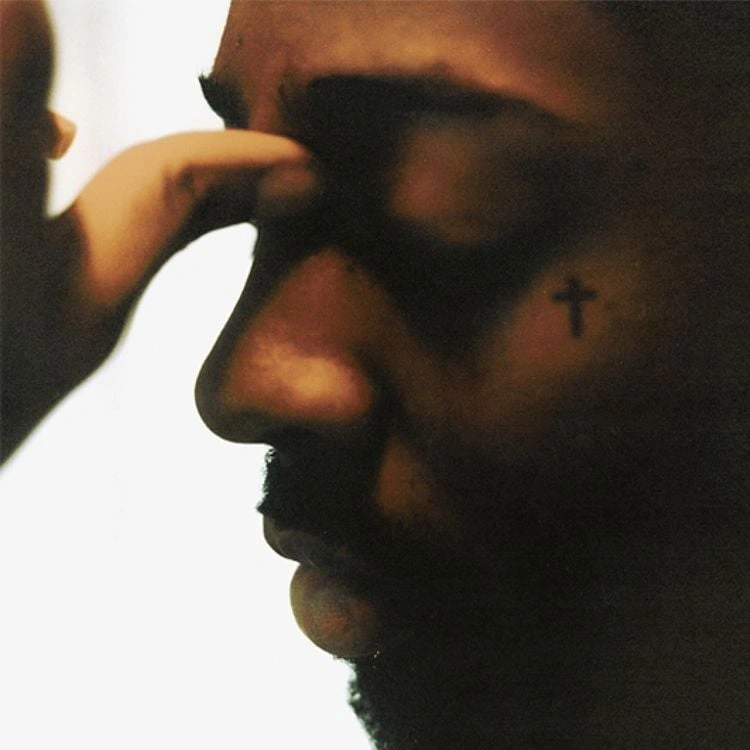
Brent Faiyaz’s Icon: Softening the Myth With the Mask
Brent Faiyaz’s Icon: Softening the Myth With the Mask
Brent Faiyaz’s Icon arrives with a deliberate, quieter approach after Wasteland, trading grand gestures for a sharper presence. This review traces how the artist refines his persona and emotional temperature across the a
When Brent Faiyaz released Icon in early 2026, it did not arrive with the spectacle that typically accompanies a third studio album. There was no aggressive rebrand, no sudden sonic rupture. Instead, the album unfolds with a kind of deliberate restraint, almost as if resisting the expectation that growth must be loud to be legible.
This is striking, especially following Wasteland (2022), a project that thrived on narrative ambition and carefully staged excess. Icon, by contrast, feels smaller in scale but sharper in intention. It is less concerned with building a world and more focused on refining a presence.

Reworking the persona
Faiyaz’s earlier work often leaned into a distinctly detached masculinity, one that hovered between confession and indifference. Relationships were framed through distance, emotional withdrawal, and a refusal to fully articulate vulnerability.
Icon does not abandon this persona, but it does recalibrate it. The emotional temperature shifts. There is a noticeable movement towards reflection, even tenderness, though never in a way that feels fully resolved. Tracks such as butterflies. and have to. suggest a willingness to remain within emotional discomfort rather than escape it through detachment.
This is not quite redemption, nor is it a complete transformation. Instead, it reads as a subtle repositioning. The figure at the centre of these songs is still guarded, but less performatively so.

Sound as atmosphere rather than statement
One of the most immediate changes in Icon lies in its sonic texture. Where Wasteland often felt expansive, even cinematic, Icon leans into a more cohesive and subdued palette.
The production draws from retro R&B traditions, particularly 1980s and 1990s influences, with synths that feel warm rather than nostalgic in a reductive sense. The emphasis is not on revival but on atmosphere. Songs rarely escalate; they linger.
This restraint produces a listening experience that feels intentionally continuous. Individual tracks do not demand attention as standalone spectacles. Instead, the album works through accumulation, building a mood that is difficult to isolate but easy to inhabit.
Intimacy without resolution
A recurring tension across Icon is its treatment of intimacy. There is a clear movement towards emotional openness, yet that openness remains partial.
Faiyaz allows moments of vulnerability to surface, but they are rarely sustained. Lines gesture towards commitment, towards care, towards emotional presence, but they stop short of clarity. The effect is not frustration so much as recognition. These are not grand declarations of love or loss, but fragments of feeling that never quite stabilise.

In this sense, Icon captures something precise about contemporary relational experience. It reflects a mode of connection shaped by hesitation, where emotional expression is both desired and resisted.
The aesthetics of control
Despite this apparent softening, control remains central to the album’s structure. Faiyaz’s vocal delivery continues to prioritise restraint. He rarely pushes his voice towards excess, instead maintaining a measured, almost understated tone.
This control extends to the album’s overall composition. At just over half an hour, Icon avoids the sprawl that often characterises streaming-era releases. There are no guest features, a choice that reinforces the album’s inward focus.
The result is a project that feels tightly contained. Nothing spills over. Even its most emotionally suggestive moments are carefully held in place.
Between evolution and consistency
What makes Icon compelling is precisely its refusal to overstate its own significance. It would be easy to frame the album as a dramatic shift towards maturity or emotional growth, but that would flatten its nuances.
Instead, it operates in a more ambiguous space. There is evolution, certainly, but it is incremental rather than transformative. The core elements of Faiyaz’s artistry remain intact: the minimalism, the emotional ambiguity, the emphasis on atmosphere over narrative clarity.
What changes is the calibration. The sharp edges are softened, but not removed. The distance is reduced, but not eliminated.
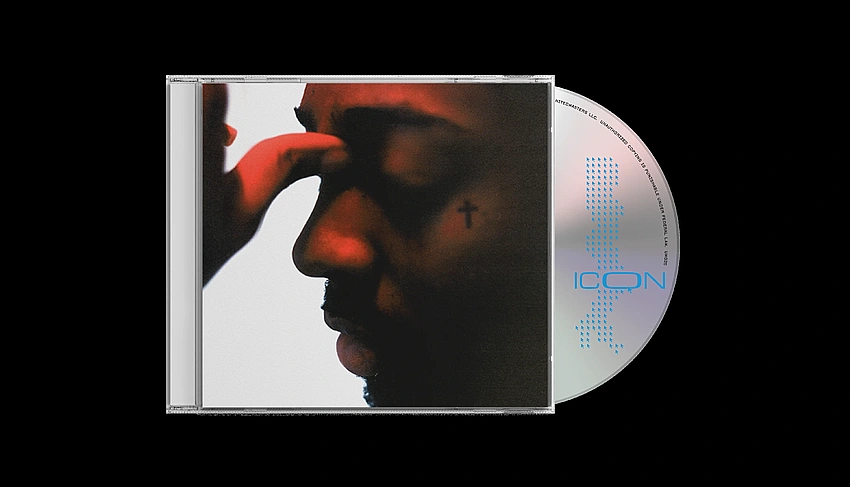
What does it mean to be an “icon”?
The title itself invites a certain expectation. To be an icon is to be fixed, recognisable, almost symbolic. Yet Icon complicates this idea.

Rather than presenting a definitive self, the album offers a version of identity that remains fluid. Faiyaz does not solidify his persona; he refines its ambiguities. The “icon” here is not a stable image, but a carefully maintained tension between visibility and opacity.
This is perhaps the album’s most interesting gesture. It suggests that in the current cultural moment, recognisability does not depend on clarity. One can be iconic without being fully known.
A controlled vulnerability
Ultimately, Icon is less about transformation than about control. It introduces vulnerability, but only within limits. It gestures towards emotional openness, but never abandons restraint.
This balance is what defines the album’s tone. It neither retreats into detachment nor fully embraces exposure. Instead, it occupies the uneasy space between the two.
There is something deliberate in this positioning. It resists the demand for resolution, for clear emotional arcs, for easily readable growth. In doing so, it aligns itself with a broader cultural sensibility that values ambiguity over certainty.
Icon does not attempt to overwhelm. It does not insist on its importance. Its impact lies in its subtlety, in the way it reworks familiar elements without announcing the shift.
What emerges is a project that feels both continuous and altered. Not a reinvention, but a refinement. Not a declaration, but a quiet adjustment of tone.
And perhaps that is precisely the point.
#BrentFaiyaz #IconAlbum #R&BMusic #MusicReview #NewMusic #AlbumReview
