Lanthimos’s Women at the Center: Power, Ambiguity, and the Gaze


Lanthimos’s Women at the Center: Power, Ambiguity, and the Gaze
Lanthimos’s Women at the Center: Power, Ambiguity, and the Gaze
Few contemporary directors provoke as much debate about gender as Yorgos Lanthimos. His films are populated by women who are strange, powerful, cruel, vulnerable, intelligent, naive, and often impossible to categorise neatly. Unlike many mainstream filmmakers, he rarely relegates women to the margins of his stories. Instead, they frequently occupy the centre of the frame and the centre of the narrative.
Yet this prominence creates a paradox. Lanthimos clearly wants women to be more than wives, girlfriends, or decorative figures. At the same time, many viewers remain uneasy about how these women are imagined and represented. The issue is not whether women exist in his films, but who gets to tell their stories and on what terms.
Across his filmography, a pattern emerges. His women are rarely conventional, but they are often filtered through distinctly male creative perspectives.
 The Three Lanthimos Women
One way to understand Lanthimos's female characters is through recurring archetypes.
The first is the emotionally detached woman. In films such as The Lobster, The Killing of a Sacred Deer, and Kinds of Kindness, women speak and behave with the same unnerving stiffness as the men around them. Gender is almost irrelevant to their performance style. Everyone inhabits a world stripped of ordinary emotional expression. These characters may feel alienating, but they are not necessarily gendered stereotypes. Rather, they are products of Lanthimos's broader cinematic language.
The second figure is the powerful woman. The Favourite offers perhaps the richest example. Sarah Churchill, Abigail Masham, and Queen Anne are ambitious, manipulative, vulnerable, and politically astute. They are not designed to be role models. They are allowed to be messy, contradictory human beings. Significantly, this film originated with a screenplay by Deborah Davis before later development by Tony McNamara and Lanthimos, suggesting that its complexity emerged from a broader range of creative voices.
The third archetype is the naive woman. From Dogtooth to Poor Things, Lanthimos repeatedly returns to women encountering the world from positions of innocence or limited knowledge. These narratives often explore power, control, and exploitation. However, they also place female vulnerability at the centre of spectacle, creating tensions that many critics have found difficult to ignore.
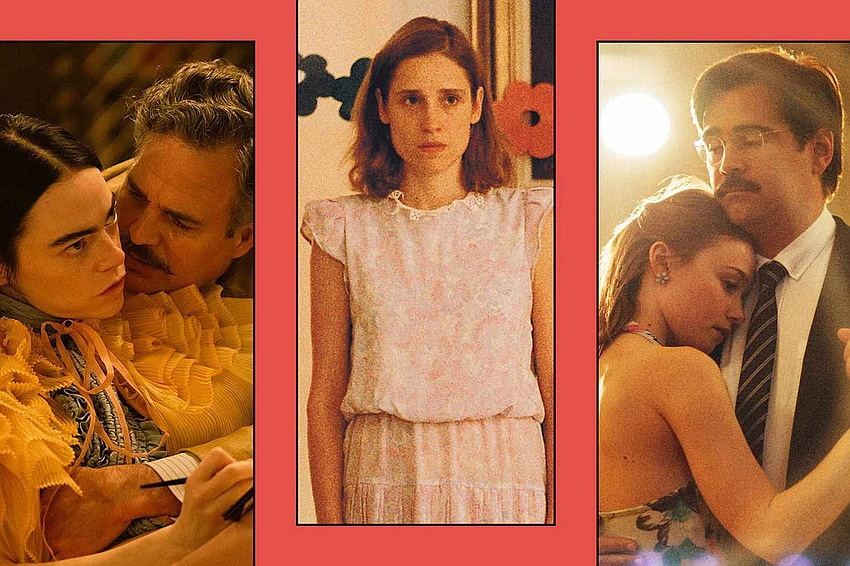 The Bella Baxter Debate
No Lanthimos character has generated more discussion than Bella Baxter in Poor Things.
Bella begins the film with the body of an adult woman and the mind of a child, gradually developing intellectual and emotional autonomy. On one level, her story can be read as a feminist narrative about self-discovery and liberation from patriarchal control. The men around her repeatedly attempt to possess or define her, and repeatedly fail.
Yet the film complicates its own feminist ambitions. Bella's visual presentation remains conspicuously youthful and childlike. Combined with the film's extensive focus on sexuality, this aesthetic choice creates an uncomfortable tension between empowerment and objectification. The issue is not simply the narrative itself but the specific cinematic decisions that shape how audiences experience it.
The debate becomes even more fascinating when one considers the source material. Poor Things concludes with revelations that radically complicate Bella's story and foreground questions of narrative authority, truth, and male fantasy. Lanthimos's adaptation removes much of this framework, placing greater emphasis on Bella's sexual awakening and personal journey.
 The Question of Collaboration
Perhaps the most revealing criticism of Lanthimos is not about any individual scene or character.
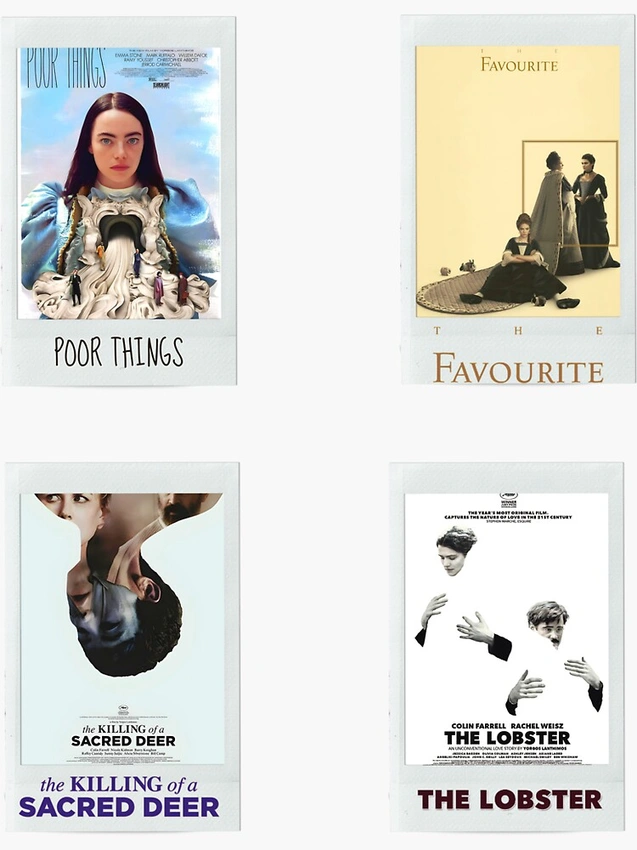
Across ten feature films, he has collaborated extensively with male writers, including Efthimis Filippou and Tony McNamara. While these collaborations have produced some of the most distinctive films of the twenty-first century, they also raise questions about whose perspectives are shaping these narratives.
This does not mean male filmmakers cannot write women. Literature and cinema would be poorer if artists were restricted to characters identical to themselves. The more productive question concerns creative diversity. If a filmmaker repeatedly claims to be creating complex female characters while rarely working with female writers, audiences are justified in asking what perspectives might be missing.
Representation is not merely about what appears on screen. It is also about who participates in creating it.
Beyond Good and Bad Representation
The most interesting thing about Lanthimos's women is that they resist simple judgement.
His female characters are rarely passive. They are not idealised symbols of empowerment, nor are they merely victims. They lie, manipulate, desire, scheme, and survive. In a cinematic landscape still crowded with flattened female archetypes, that complexity matters.
At the same time, complexity alone does not exempt a filmmaker from criticism. The repeated use of female nudity, the emphasis on youthful female bodies, and the recurring fascination with vulnerable women invite scrutiny, particularly when these choices seem more aesthetic than thematic.
What remains most compelling about Lanthimos is not that he has solved the problem of representing women, but that his films expose how unresolved the problem still is. His cinema exists in the uncomfortable space between fascination and understanding, between representation and projection. The women in his films are undeniably memorable. The lingering question is whether they feel fully lived or whether they remain, ultimately, women imagined by men.
#Lanthimos #WomenInFilm #FilmAnalysis #GenderInCinema #Arthouse
