KATSEYE: Glocal Girl Group as Gnarly and Commodity

KATSEYE: Glocal Girl Group as Gnarly and Commodity
KATSEYE: Glocal Girl Group as Gnarly and Commodity
Explore KATSEYE's journey as a girl group in the digital age. Their new single 'Gnarly' captures the complex blend of spectacle and authenticity in global pop music. Join the conversation now!
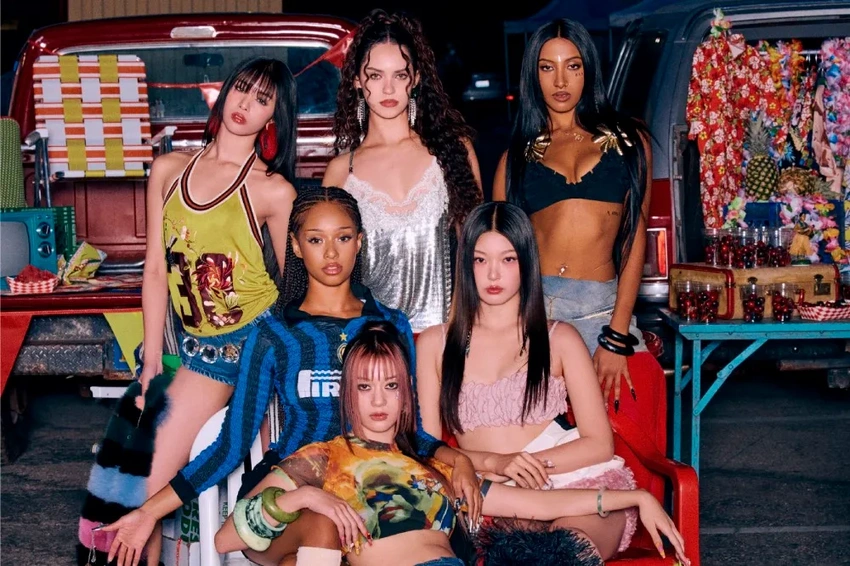
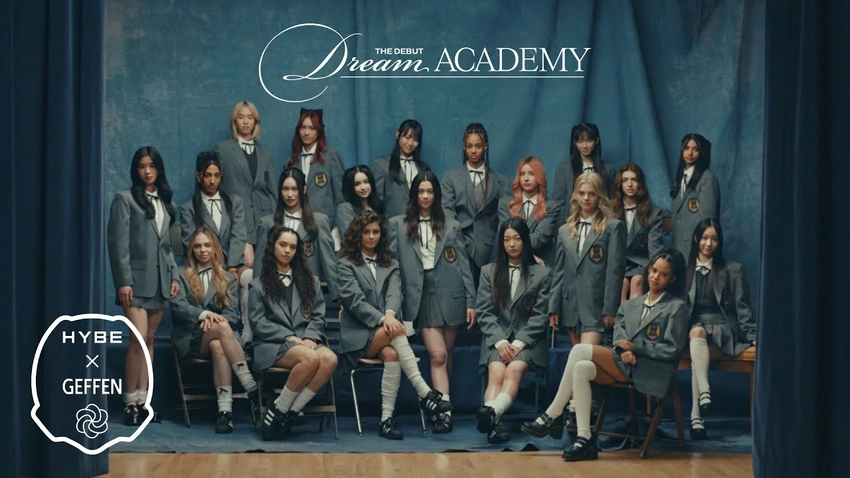
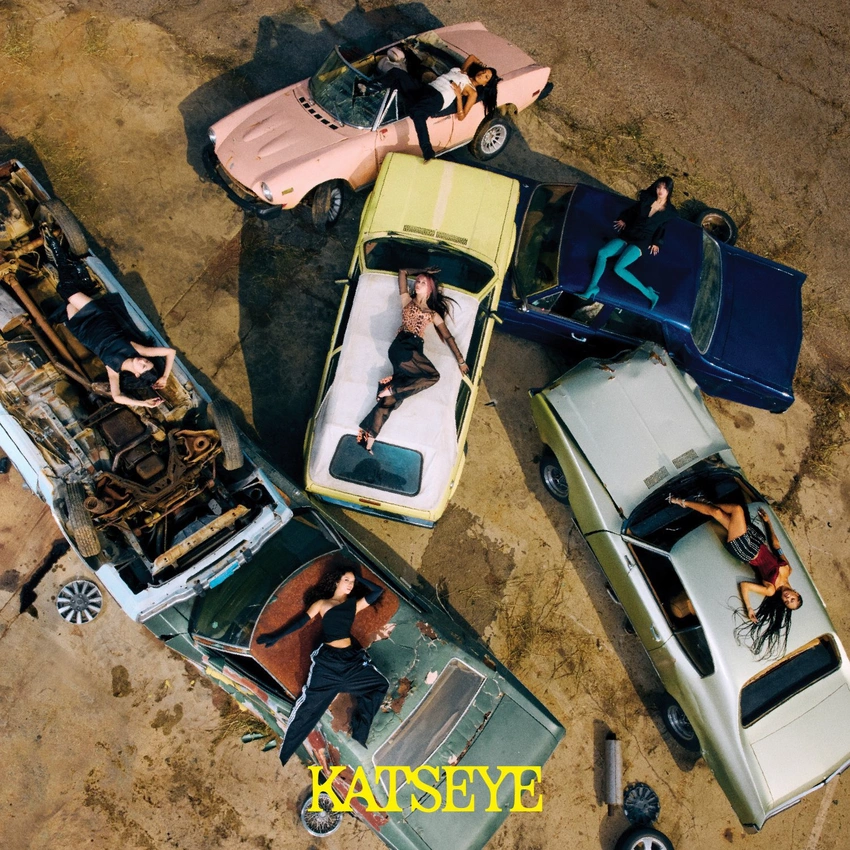
What does it mean to be a girl group in the age of global algorithms and hybridised aesthetics? What does it mean to be a product, a symbol, and a spectacle, all while performing the fragile dance of authenticity? Enter KATSEYE, the six-member group born from the HYBE x Geffen survival show The Debut: Dream Academy, whose very existence feels like a case study in global pop's most shimmering contradictions. Their recent comeback single, aptly titled “Gnarly,” crystallises this tension, surfacing a sonic and symbolic complexity that asks us not to decode the group but to live in their friction.
 KATSEYE as Glocal Artefact
To begin, KATSEYE is a glocal artefact, the living embodiment of Roland Robertson’s term for the collision of global cultural flows with local identities. With members from the U.S., Brazil, South Korea, the Philippines, Switzerland, and Indo-America, KATSEYE is not just internationally palatable; they're transnationally designed.
 Singing predominantly in English, trained under the rigorous discipline of K-pop, and marketed to Gen Z consumers fluent in TikTok, they do not represent a fusion of cultures as much as a strategic overlay: curated, coded, and monetised. Their brand is their borderlessness.
“Gnarly” as Sound and Statement
But glocalisation doesn’t always mean harmony. Often, it means dissonance. And that’s where “Gnarly” enters, teeth bared. Musically, the song is a departure from their debut: a snarling, genre-twisting track that fuses industrial pop, trap, and cybernetic soundscapes.
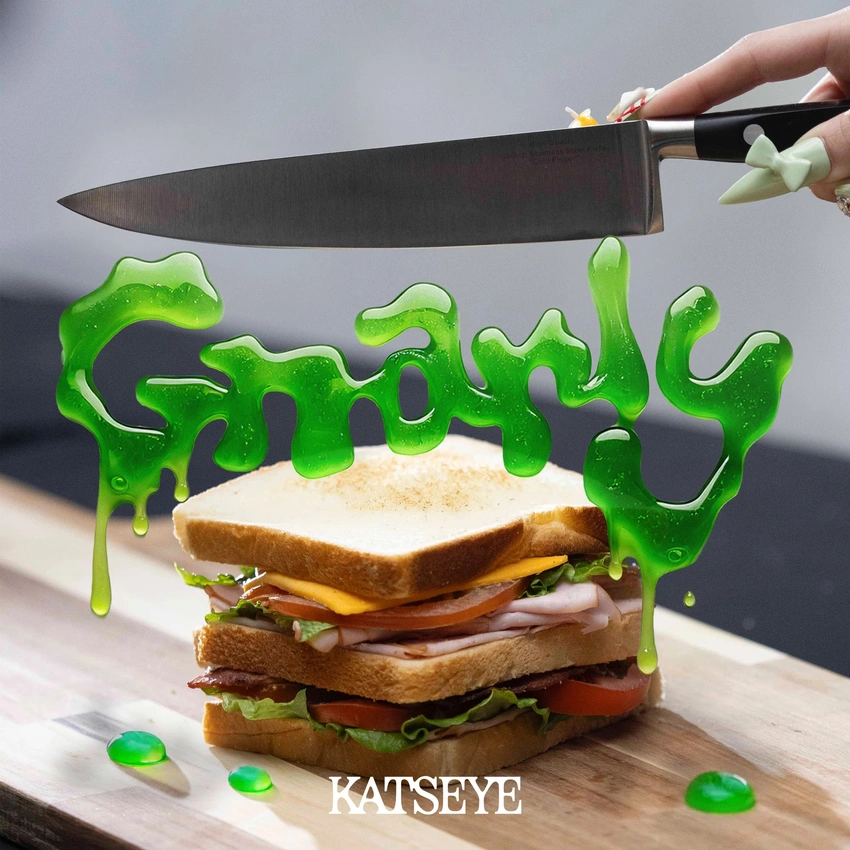 The title itself, “Gnarly,” feels like a dare. It’s slangy, disruptive, and loaded with contradictory connotations: something cool and something grotesque, something edgy and something wild. In surf culture, “gnarly” refers to danger and thrill; in KATSEYE’s hands, it becomes a manifesto. “Gnarly” isn’t just a song—it’s a positioning. It says, "We" are not your polished girl-next-door. We’re jagged. We glitch.
Manufactured Rebellion and the Aesthetic of Edge
If their first single, “Debut,” was the ceremonial curtain-raiser, all gleaming synths and aspirational lyricism, “Gnarly” feels like the anti-polish. Vocals are distorted, arrangements tense. It doesn't follow a verse-chorus-verse structure as much as it pulses in waves—fragmented, erratic, even aggressive. And this, paradoxically, feels more real. The song leans into what critic Simon Reynolds once described as the noisy edges of pop: those moments where the product exposes its wires, its performance of rebellion.
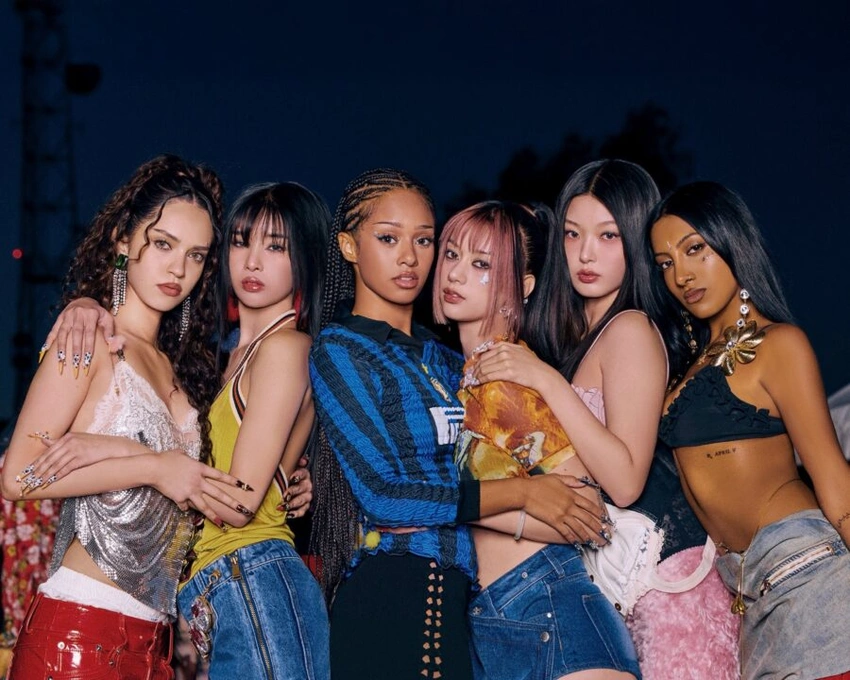 And yet, rebellion too is part of the system. KATSEYE doesn’t escape commodification—they brand it. The jaggedness of “Gnarly” is itself produced, styled, and sold. This is not a flaw in the group’s design; it is the design. As Baudrillard would argue, we are in the realm of simulation, where reality is replaced by representations that refer only to each other. “Gnarly,” then, is not raw but aestheticised rawness, carefully packaged to signify edge and deviation.
Contradictions and Identity
But here lies the gnarl, the knot of contradiction at the centre of KATSEYE: they are both agent and object. They do not simply perform global girlhood; they are it, in its most capitalised and ambivalent form.
 In the choreography of “Gnarly,” we see sharp angles, aggressive femininity, and coordinated rupture. Their multilingualism becomes part of the spectacle; their identities are plural but flattened. As postcolonial theorist Homi Bhabha might argue, KATSEYE functions through mimicry, not of one culture, but of all. They’re always almost familiar, but never quite locatable.
Gender, Authenticity, and Affective Labour
There is also something gendered in the group’s tightrope walk between spectacle and subjecthood. Girl groups, historically, are both cultural producers and commodities, vessels for beauty standards, for soft power, and for market-tested rebellion. KATSEYE glitches that lineage. They are soft and sharp, global and post-local, cybernetic and tear-stained. Their tears in behind-the-scenes clips, navigating pressure, language, and public scrutiny, are not distractions from the product but part of its marketing. As Sarah Banet-Weiser writes, authenticity is the new currency of capitalism. The most successful pop stars aren’t the most perfect; they’re the most legibly human.
Joy, Fragmentation, and Cultural Resonance
Still, KATSEYE offers something worth watching, not just as a media product, but as a case study in affect, labour, and longing. They generate joy. Fans around the world find resonance in their multilingualism, their diasporic aesthetics, and their strangeness. “Gnarly” becomes a rallying cry not just for disruption but for survival within a system that demands both polish and pain. For the girls themselves, performance may be both agency and burden. For us, the spectators, the fans, and the scholars, they’re a mirror of how we consume, desire, and decode pop in the era of platform capitalism.

Pop Prophecy in a Glitched Future
To call KATSEYE “just another girl group” is to misunderstand the conditions of their production. They are not simply content. They are structure, code, and effect. With “Gnarly,” they stretch the boundaries of what a global girl group can sound like, look like, and mean. They are a commodity, yes, but also something more unruly. Something strange, stitched together from a thousand influences and yet still pulsing with its own gnarly life.
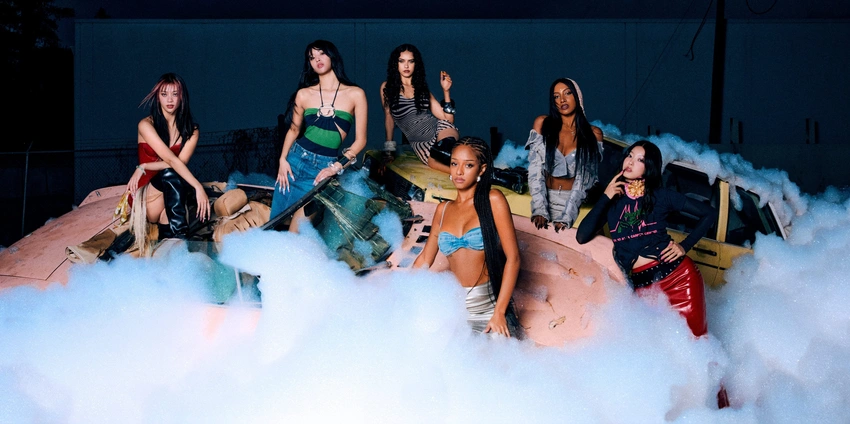 KATSEYE, then, is a spectacle of contradictions—performed authenticity, synthetic edge, and global girlhood on shuffle. They are gnarly in every sense: difficult, radical, slick, and strange. And that’s what makes them worth thinking about, not as an anomaly, but as a prophecy.
#KATSEYE #Gnarly #GirlGroup #PopMusic #Authenticity #Glocal #Music
