Kacey Musgraves Finds Freedom in 'Middle of Nowhere'

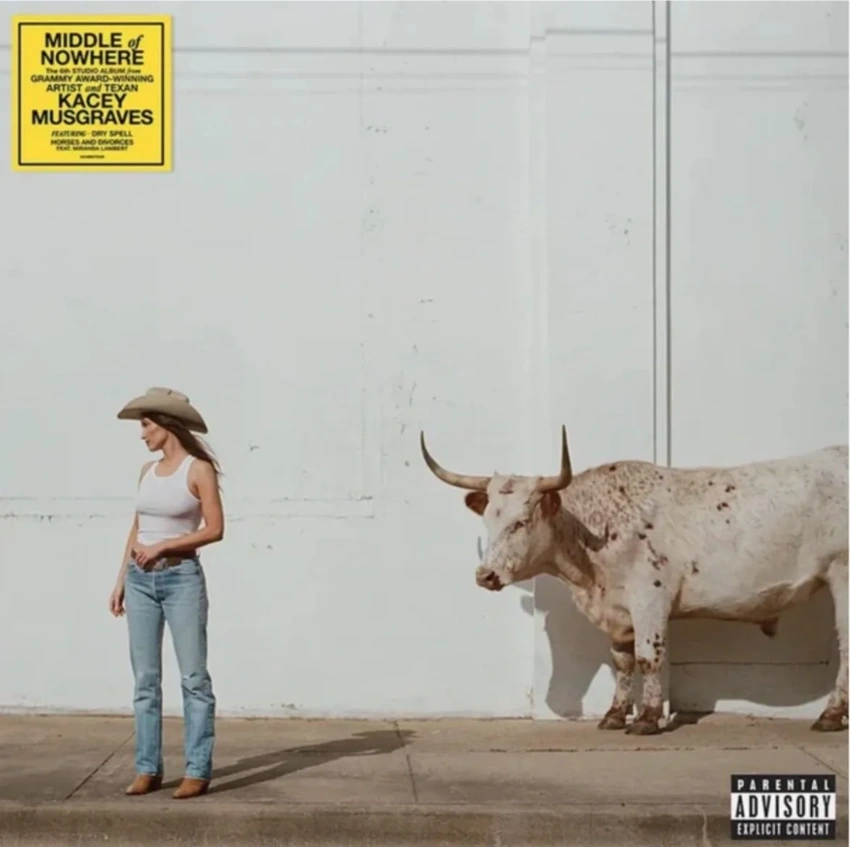
Kacey Musgraves Finds Freedom in 'Middle of Nowhere'
Kacey Musgraves Finds Freedom in 'Middle of Nowhere'
Kacey Musgraves’ Middle of Nowhere leans into quiet, turning loneliness into a musical mood. The album threads liminal spaces into a meditation on isolation and a strange, freeing restlessness.
In a pop landscape increasingly obsessed with algorithmic immediacy, Kacey Musgraves chooses stillness on Middle of Nowhere. The record drifts in slowly, dusty and sun-faded, like a highway town appearing after miles of emptiness.
What makes the album compelling is the way it turns emotional uncertainty into an aesthetic principle. Across the record, Musgraves seems less interested in resolution than in inhabiting transition itself. The “middle of nowhere” becomes both a literal Texas landscape and a psychological condition: isolation, freedom, heartbreak, restlessness, and strange contentment existing all at once.
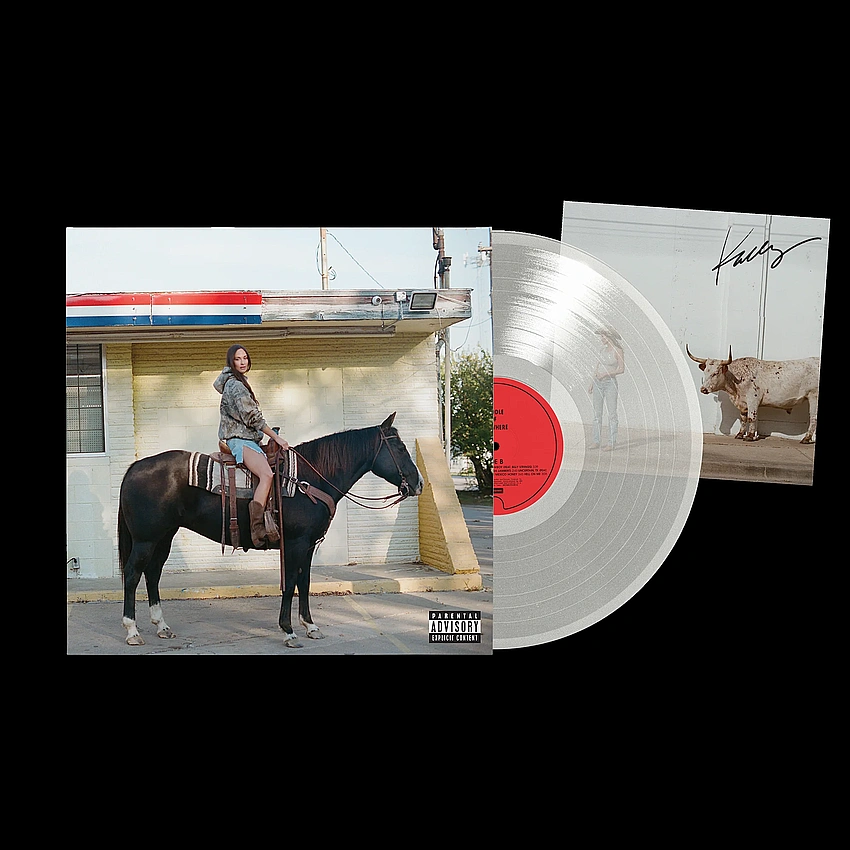
The Romance of Empty Space
The album’s strongest idea is its fascination with liminal space. Airports, highways, desert towns, lonely bars, half-finished relationships: these settings recur throughout the project like fragments of Americana suspended outside linear time. Rather than treating loneliness as tragedy, Musgraves frames it as a difficult kind of liberation.
That thematic concern gives the album its emotional coherence. Earlier records often balanced sincerity with clever irony, but Middle of Nowhere sounds more stripped of protective distance. The wit is still there, especially in songs like “Dry Spell”, yet the humour feels drier now, almost weary. The jokes arrive after disappointment rather than before it.
What emerges is an album deeply interested in adulthood, particularly the unsettling freedom that comes when familiar structures disappear. Relationships end, identities loosen, hometowns become memories rather than destinations. Musgraves lingers inside that instability without trying to convert it into empowerment rhetoric. That restraint gives the album much of its emotional intelligence.

Returning to Country Without Nostalgia
The conversation around the album has naturally centred on its return to more traditional country instrumentation after the polished textures of Star-Crossed and the introspective folk-pop of Deeper Well. But Middle of Nowhere is not really a “back to basics” album. It sounds more like someone reconsidering the geography of her artistic identity.
Pedal steel, western swing, acoustic guitars, and dusty Americana arrangements dominate the record, yet the album never feels trapped by revivalism. Traditional country becomes less a fixed genre than a cultural memory Musgraves can move through and reshape. Mexican and Tejano influences surface naturally throughout the album, broadening its sense of regional identity beyond a narrow Nashville framework.
That balance between tradition and fluidity is what makes the record resonate. Contemporary country music often oscillates between hyper-commercial polish and reactionary authenticity politics. Musgraves avoids both extremes. Her version of country remains porous, open to folk, pop, Norteño textures, and soft-rock melancholy without losing its centre.
The result is an album that feels geographically grounded yet emotionally untethered.
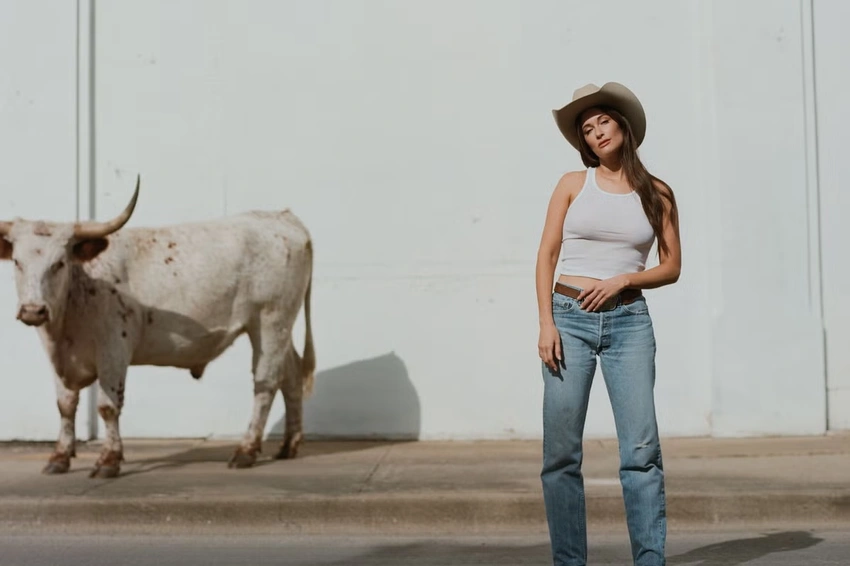
Texas as Myth and Memory
Texas has always haunted Musgraves’ music, but Middle of Nowhere treats it differently from her earlier work. Previously, Texas often appeared as a source of humour or rebellious identity. Here it becomes spectral: less a real location than an emotional archive.
The album repeatedly returns to images of dust, drought, bars, cattle, highways, and empty stretches of land. Yet these landscapes are never romanticised into simplistic Americana. They carry loneliness as much as comfort. Home is presented not as stability, but as something fragmented and partially inaccessible.
That tension gives the album a distinctly literary quality. The Texas of Middle of Nowhere resembles the symbolic landscapes of Southern Gothic and Western fiction, where geography mirrors emotional disorientation. The empty road becomes a metaphor for suspended identity. The rural town becomes a site where memory and alienation coexist.
Even the album title captures this duality. “Nowhere” traditionally signifies absence or insignificance, but Musgraves reframes it as a space of possibility. To exist in the middle of nowhere is also to exist outside expectation.
The Beauty of Emotional Understatement
Musgraves has always excelled at understatement, and this album depends on that quality. There are no explosive climaxes here, no grand declarations of devastation. Instead, the songs move with remarkable patience. Feelings arrive indirectly, through detail and atmosphere rather than theatrical confession.

That subtlety becomes especially effective on collaborations like “Horses and Divorces” with Miranda Lambert, where shared exhaustion replaces melodrama. The duet feels lived-in rather than performative, two voices recognising the absurdity and inevitability of emotional collapse at the same time.
Similarly, the presence of artists like Willie Nelson and Billy Strings never feels like prestige stunt-casting. Their appearances reinforce the album’s broader meditation on lineage, regional identity, and musical inheritance.
An Album About Existing Between Versions of Yourself
What ultimately makes Middle of Nowhere linger is its revelation. It learns how to sit with uncertainty. That may be why the record feels unusually mature, even within Musgraves’ discography. It understands that adulthood often means existing between identities: between relationships, between homes, between certainty and reinvention. The album treats that suspended state not as failure, but as an inevitable condition of modern life. The album finds beauty in emotional drift, in silence, in roads that do not clearly lead anywhere.
And perhaps that is the album’s achievement: turning nowhere into somewhere worth staying for a while.
#KaceyMusgraves #MiddleOfNowhere #IndieMusic #Americana #AlbumReview #CountryMusic #NewMusic
