Drake’s Iceman and the Exhaustion of Infinite Content


Drake’s Iceman and the Exhaustion of Infinite Content
Drake’s Iceman and the Exhaustion of Infinite Content
Drake’s Iceman explores the exhaustion of the streaming era, where constant album drops and algorithmic visibility begin to replace artistic permanence. A literary and cultural analysis of Drake’s triple-release strategy
There is something strangely fitting about Drake naming an album Iceman. The record arrives cold, polished, emotionally refrigerated, and almost impossible to hold onto once it ends. Not because it is aggressively terrible, but because it feels designed for circulation rather than permanence. Music that slides past the ear instead of lodging itself inside it.
What makes Iceman fascinating is not simply the album itself, but the conditions around it. Drake did not just release one record. He released Iceman, Habibti, and Maid of Honour simultaneously, turning an album rollout into a streaming flood. The gesture felt less like artistic necessity and more like algorithmic domination, as though visibility itself has become the final genre of contemporary pop music.

The Age of the Endless Drop
The modern music industry no longer rewards absence. It punishes it.
Artists once disappeared for years between albums, allowing mythology to accumulate around their work. Now the streaming economy demands constant replenishment. Songs are no longer experienced as singular cultural events but as disposable updates in an infinite feed. Drake understands this system better than almost anyone. His career has been built on omnipresence. There is always another feature, another loosie, another playlist-ready track, another carefully memeable line.
The triple release strategy feels like the logical endpoint of this model. Why make one statement when you can occupy every playlist category simultaneously? One album for rap listeners, one for late-night melancholy, one for dance-floor drift. The artist becomes less auteur and more content ecosystem.

After the Kendrick Lamar Shadow
It is impossible to hear Iceman outside the shadow of Kendrick Lamar. The feud fundamentally altered Drake’s cultural position. For over a decade he occupied an untouchable space in popular music: commercially dominant, emotionally legible, endlessly adaptable. But public perception shifted after the battle with Lamar, and Iceman often sounds haunted by that loss.
The album circles grievance obsessively. There are references to betrayal, loyalty, humiliation, and public scrutiny scattered across the tracks. What once felt diaristic in Drake’s writing now feels defensive. Earlier Drake albums transformed insecurity into atmosphere. Here insecurity hardens into resentment.
That emotional shift matters because Drake’s greatest talent has always been emotional permeability. He could make vulnerability feel strangely mass-produced yet intimate. On albums like Take Care or Nothing Was the Same, melancholy carried texture and shape. On Iceman, the feeling often dissolves into repetition.

Even the production reflects this fatigue. The beats are glossy and technically immaculate, but there is a sense of emotional automation running through the album. Songs blur together into streaming ambience. Hooks arrive already optimised for TikTok edits and gym playlists. Music as perpetual background radiation.
Quantity Versus Memory
The strange paradox of Drake’s recent output is that the more music he releases, the less distinct it becomes.
This is not merely a Drake problem. It is an industry problem. Streaming platforms reward duration, frequency, and replayability over cohesion. The album, once treated as a carefully structured artistic object, increasingly functions as data accumulation. Longer tracklists mean more streams. Surprise releases create social media shockwaves. Deluxe editions stretch chart longevity indefinitely.
Art becomes infrastructural.
The triple-drop strategy reveals how thoroughly music consumption has become governed by digital abundance. There was a time when scarcity intensified meaning. Now overproduction dilutes it. One finishes Iceman not with the satisfaction of encountering a fully realised artistic vision, but with the numbness of scrolling too long online.
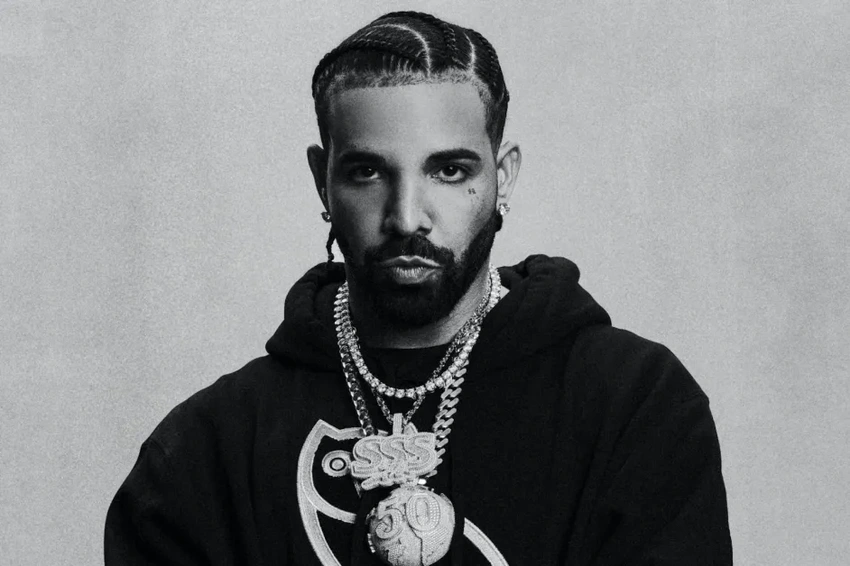 The Washington Post captured this sensation well, questioning whether anyone actually needed this much Drake at once. The issue is not productivity itself. Some artists thrive through excess. Prince famously turned prolific output into a form of creative experimentation. But with Drake, the volume increasingly feels strategic rather than exploratory.
Music engineered to maintain presence rather than pursue transformation.
Listening to Iceman feels like witnessing the transformation of the pop star into a permanent content generator, someone who cannot disappear long enough to evolve because the machine surrounding them cannot tolerate silence. The result is music trapped in perpetual motion, endlessly refreshed but rarely renewed.
There are flashes throughout the album where the old Drake briefly reappears: moments of humour, flashes of wounded intimacy, fragments of genuine self-awareness. But they vanish quickly beneath the weight of excess.
Perhaps that is what makes Iceman strangely sad. Not because Drake is incapable of making great music, but because the contemporary music industry no longer seems structured to encourage restraint, mystery, or artistic risk. The system rewards saturation. And saturation eventually erodes memory itself.
#Drake #Iceman #HipHop #MusicIndustry #PopCulture #StreamingEra #AlbumReview
