Tinashe’s Popstar: The Sound of Wanting to Be Seen


Tinashe’s Popstar: The Sound of Wanting to Be Seen
Tinashe’s Popstar: The Sound of Wanting to Be Seen
Tinashe’s ‘Popstar’ pairs restless electronic beats with candid reflections on recognition and the cost of wanting to be heard, balancing dancefloor euphoria with professional disillusionment.
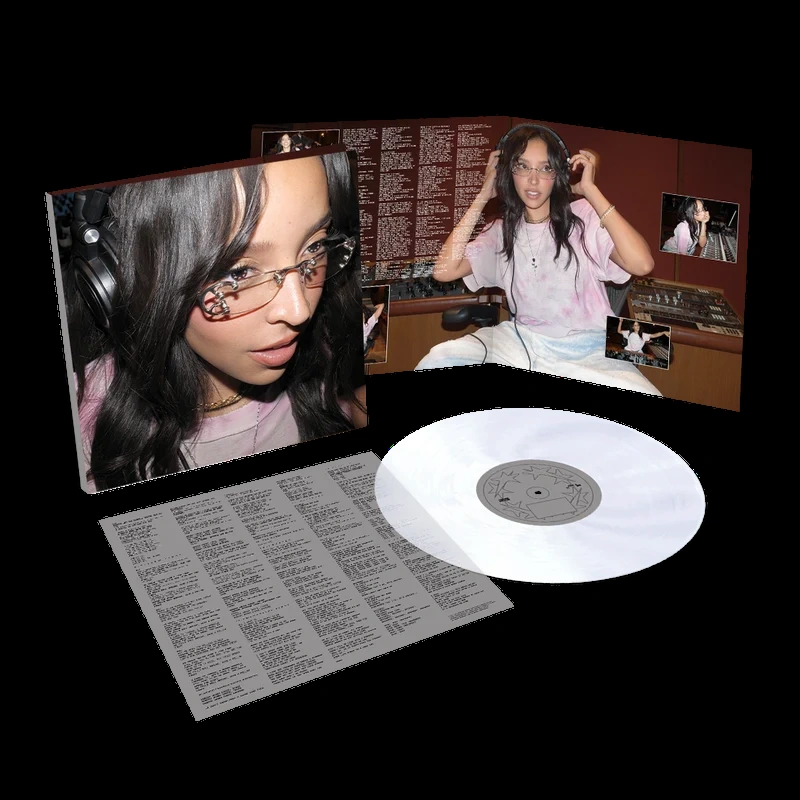
Tinashe has spent much of her career making music that earns her a loyal audience, even as mainstream recognition has often remained just out of reach. Her eighth studio album, Popstar, released on 25 September 2026, sounds like an artist who has spent enough time thinking about this to turn it into music.
The album is a curious mix of dancefloor euphoria and professional disillusionment. Its electronic production is restless, its rhythms frequently unpredictable, and its more vulnerable moments suggest that the desire to be heard can become exhausting in itself. Tinashe does not seem particularly interested in choosing between these feelings. She wants to dance, and she wants her work to matter. Neither desire cancels the other out.
Making a night of it
The opening track, Sunglasses, establishes this tension almost immediately. Its strange, computerised textures gradually come into focus before Tinashe settles into a meditation on music as a means of escape. There is something recognisable about the impulse: sometimes going out is less about having a good time than finding a way to stop thinking for a while.
That idea carries into Too Easy and Melatonin, two of the album's most immediate pleasures. The former has a playful, early-2000s pop sensibility, while the latter moves through abrupt changes in rhythm and production without losing its momentum. Tinashe has always been comfortable moving between R&B, electronic music and pop, but here the shifts feel particularly purposeful. The songs are not simply designed to keep a party going; they make unpredictability part of the fun.

The trouble with wanting more
The album becomes more revealing when Tinashe turns towards the career that has brought her here. Empty Stadium is perhaps its most uncomfortable track, imagining the loneliness of performing for an audience that never quite arrives. After so much movement and sonic excess, the image of a singer waiting for applause feels almost cruel in its simplicity.
It is also difficult not to read the song against Tinashe's own career. She has spent years releasing music, developing her sound and influencing the wider pop landscape, often without receiving the level of attention that might reasonably be expected. The song asks what happens when the pursuit of recognition becomes inseparable from the desire to prove that all the work was worth it.
Twentyfive Eight approaches the same question from another direction, challenging the assumption that professional achievement necessarily amounts to personal fulfilment. There is a familiar pressure here, in a culture that encourages us to turn every interest into a career and every success into evidence of our worth. What happens when the thing you have worked towards for years becomes the very thing that prevents you from feeling satisfied?

A pop star, on her own terms
Not every track is equally compelling, and some of the album's internet-inflected language risks dating its observations to the moment in which they were written. But the contrast between its dance tracks and its more introspective songs gives Popstar a personality that extends beyond its individual singles.
To call an album Popstar is to make a declaration, but it is also to invite scrutiny. Who gets to claim that identity, and who decides whether the claim is legitimate? Tinashe's career makes these questions particularly interesting because she has never fitted neatly into one musical category. Her versatility has been a strength, even when the industry has struggled to translate it into a simple narrative of success.

What does recognition actually look like?
What stays with me about Popstar is that it does not treat success as a problem that can be solved simply by becoming more famous. Tinashe wants recognition, but the album also seems aware that external validation cannot settle every question about artistic worth.
You can be confident in your abilities and still feel overlooked. You can love what you do and resent what it demands of you, spend years working towards a moment of recognition only to discover that the waiting has changed what you want from it. Popstar does not resolve these tensions, nor does it need to. Its best songs allow ambition and uncertainty to coexist, giving us an artist who is still reaching for something without pretending she has already found it.

Login to comment.