Paramore’s Hayley Williams Rewrites Pop Release Rules, With 17 Singles

Paramore’s Hayley Williams Rewrites Pop Release Rules, With 17 Singles
Paramore’s Hayley Williams Rewrites Pop Release Rules, With 17 Singles
Hayley Williams surprises fans with 17 solo singles released in a unique digital experience. Explore how she blended music with interactive art.
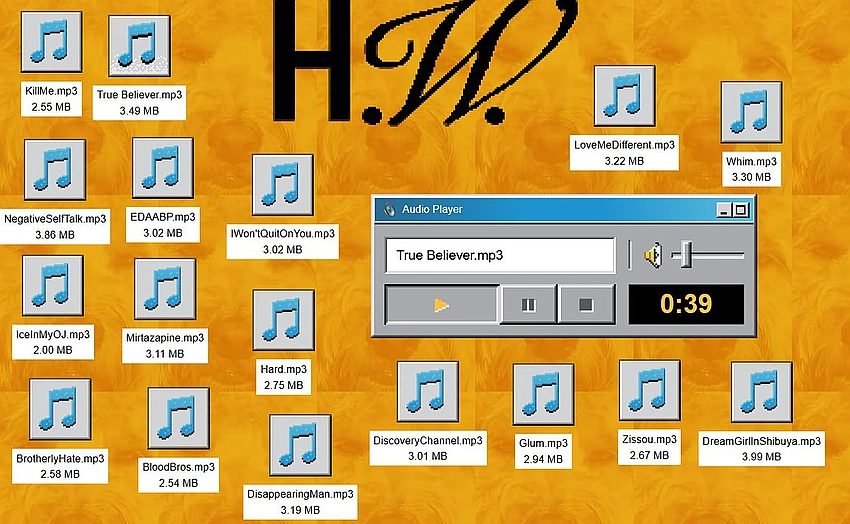
In a characteristically unconventional move, Hayley Williams released a new collection of 17 solo songs, her first since 2021’s Flowers for Vases/descansos, not as an album but as a scattered constellation of singles. The initial rollout was cryptic: fans could access the songs only by entering a special code on a retro-style website linked to Williams' vegan hair-dye company, Good Dye Young. This hidden page featured an early-2000s-inspired desktop interface, complete with movable MP3 icons, lyrics, and an eerily intimate “Misc.” folder.

The entire experience invited listeners not only to hear the songs but also to interact with them as digital artefacts. Rearranging the files on the site mimicked the experience of sifting through someone's private desktop, blurring the line between listener and voyeur, fan and co-creator. Within days, the tracks disappeared from the site, only to resurface on streaming platforms, this time as individual singles rather than a unified album.
No Album, No Order: Just 17 Standalone Visions
Williams did not release these songs as a cohesive album, and she hasn’t commented on whether they are intended to be a cohesive album. Fans have taken to calling the project Ego or Ego Death, but the absence of an official title or sequencing reinforces the idea that the order doesn't matter. On streaming platforms, each track is accompanied by its bespoke artwork: black-and-white portraits of Williams adorned with gold halos, planetary motifs, and frenetic squiggles. This design aesthetic, repeated across the release, implies a kind of conceptual unity without ever declaring it.
This refusal to frame the work as an “album” might be more than a stylistic choice; it could be a strategic dismantling of expectations. By preventing listeners from experiencing the songs in a fixed order, Williams challenges the assumption that emotional or artistic expression must be presented as a linear narrative. Instead, she encourages a kind of sonic free association.
A New Era of Artistic Independence
This release also marks Williams’ first major project since the expiration of her long-time and often-criticised contract with Atlantic Records. Having signed to the label at age 14, her journey with Paramore was defined in part by the constraints of corporate oversight. But now, with the launch of her self-owned imprint “Post Atlantic,” Williams appears to be making a symbolic and material break from her past.

The shift is audible. On “Ice in My OJ,” she rages against the industry that profited from her youth: “A lot of dumb motherfuckers that I made rich.” The track also references her early 2000s side project, Mammoth City Messengers, subtly bringing her full circle. It’s a sonic reclamation of her voice, not just in tone but in ownership.
Themes of South, Race, and Rebellion
Several songs aim at Williams’ Southern upbringing with pointed political commentary. In “Ego Death at a Bachelorette Party,” she places herself at the centre of a caricatured Southern scene as “the biggest star at this racist country singer’s bar” before assuring herself that “it can only go up from here.” On “True Believer,” she directly critiques the religious and racial hypocrisy of evangelical nationalism, pointing out the cultural whitening of Jesus as a symptom of deeper structural bigotry. References to songs like “Strange Fruit” thread American racial history through her sense of place and alienation.
These songs are not subtle. They confront Southern cultural contradictions with boldness, turning personal discomfort into public reckoning.

A Soundtrack to Mental Health and Melancholy
True to her work with Paramore and her solo projects, Williams continues to examine her mental health with lyrical precision. “Mirtazapine,” a grunge-influenced homage to the antidepressant Remeron, sets the tone for the collection’s quieter introspections. “Glum,” which premiered alongside it, ponders: “Do you ever feel so alone that you could implode and no one would know?” Similarly, “Negative Self Talk” offers a raw portrait of spirals: “Chorus of my worst thoughts, drawing curtains shut / As hope takes a bow.”
These aren’t motivational songs but honest ones. Williams doesn’t promise solutions; she simply articulates the weight of living with unresolved feelings.

Lovesick Echoes and Heartbreak Speculation
Many fans have speculated about the status of Williams’ relationship with Paramore guitarist Taylor York, especially given the emotionally raw content in tracks like “Disappearing Man.” Lyrics like “There were no conditions to my love / It was endless ’til there was no you to hold” are tinged with romantic loss, while tracks like “Love Me Different” and “Whim” explore the aftermath of heartbreak with a sense of fragile hopefulness. Though there are no explicit confirmations, the emotional terrain suggests a rift, whether relational, professional, or existential.

Unresolved Futures, Open-Ended Art
While Williams offers no formal statement on whether this collection represents a third solo album, what’s clear is that she is operating on her terms. The release is equal parts cryptic and confessional, performative and raw.
Still, nothing feels final. The band’s website still lists “’24 – ∞,” a visual indication that Paramore continues, undefined and unbound. In the meantime, Williams seems to have found a language and structure for her solo work that lets her speak without compromise.
In letting go of traditional formats, Hayley Williams has opened up a different kind of dialogue—with her fans, her past, and herself. This isn’t a return. It’s a release.
#HayleyWilliams #NewMusic #IndieArtist #GoodDyeYoung #MusicExperience #Paramore #MusicReview #PopCulture
