Willoughby Tucker... by Ethel Cain: Desire, Longing, Memory


Willoughby Tucker... by Ethel Cain: Desire, Longing, Memory
Willoughby Tucker... by Ethel Cain: Desire, Longing, Memory
Explore Ethel Cain's sophomore album, an emotional blend of sound and memory that embraces longing and nostalgia in each unique track.
Willoughby Tucker, I’ll Always Love You moves through time like a remembered summer: its heat, its languor, and its slow decay. Ethel Cain’s sophomore album does not rush to deliver narrative satisfaction. Instead, it settles into the suspended space of adolescence, a prequel to her previous work that replaces the brutal violence of Preacher’s Daughter with the psychic restlessness that precedes it. The result is an album that inhabits the emotional half-light between innocence and ruin, asking the listener to linger in a place where longing is constant and resolution never arrives.

Sound as Emotional Topography
The soundscapes here operate less as background and more as topography, slow, heavy arrangements through which the listener must travel. Cain uses ambient swells, gothic folk textures, and deliberate pacing to suspend us within moments that might otherwise pass unnoticed. Tracks stretch far beyond the conventions of pop form, eight, ten, or even fifteen minutes, not for indulgence’s sake, but to allow time to deform and repeat itself, as it does in memory.

In “Nettles”, the banjo’s brittle resonance and the bowed strings create a texture both luminous and suffocating. The repeated line, “To love me is to suffer me,” is not offered as melodrama but as fact, delivered in a voice that seems to dissipate even as it speaks. This is music as endurance, where atmosphere is inseparable from emotional weight.
Disruption Within Stillness
If much of the album moves with the glacial patience of dream logic, moments like “Fuck Me Eyes” rupture the stillness. Here, the shimmer of synth-pop elements collides with the grit of small-town mythology, reframing teenage desire not as an innocent rite of passage but as an archetype already shadowed by loss. It is not a concession to accessibility so much as a reminder that longing can exist as both pulse and ache, momentarily vivid before fading back into the slow expanse.

Even in its most rhythmic passages, the album resists the momentum of traditional songwriting. Each track holds the listener in a state of suspension, suggesting that the shape of the story matters less than the textures through which it is told.
Narrative as Fragment
The album’s prequel status invites a reading not in terms of plot progression but of myth-building. Names recur, geographies blur, and scenes emerge in partial focus: a roadside in Nebraska, a figure named Janie, and an unnamed lover whose absence radiates through the record. Rather than a linear arc, Cain offers something closer to an epistolary form: fragments of correspondence never sent and diary entries that break off mid-thought.
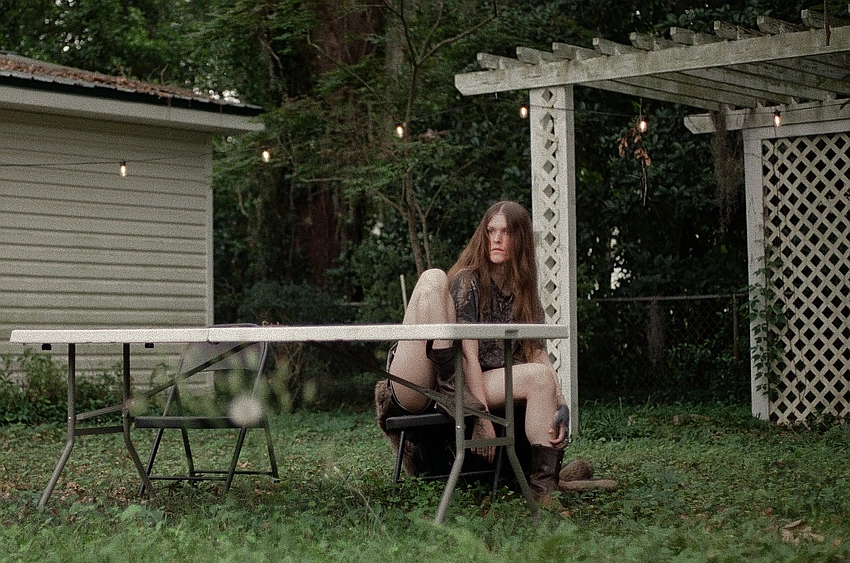
This approach lends the work a literary sensibility, one in which absence becomes as significant as presence. The listener is required to assemble connections across tracks, much as a reader of a modernist novel might construct narrative coherence from disjointed vignettes.
The Weight of Time
One of the most striking features of Willoughby Tucker is its manipulation of time. The elongated structures do not merely delay resolution; they alter perception, replicating the experience of remembering. “Waco, Texas”, nearly fifteen minutes long, unfolds without a conventional chorus, instead drifting between musical motifs like a memory returning in fragments. It recalls the way grief operates, not as a single, climactic moment, but as a slow erosion of certainty.
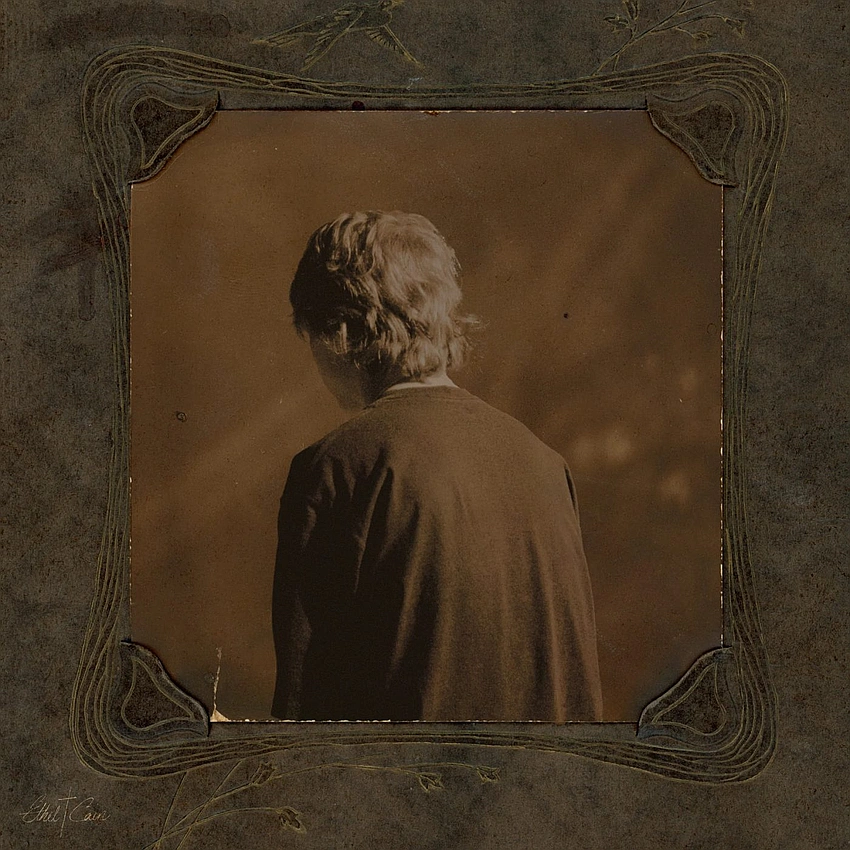
This temporal dilation also reframes the relationship between sound and emotion. Where shorter songs might rely on lyrical immediacy, Cain allows entire minutes to pass in instrumental reflection, making the absence of words a part of the storytelling.
Aesthetic Refusal and Emotional Fidelity
The album’s refusal to conform to the demands of immediacy, the hook, and the neat ending constitutes its aesthetic stance. It privileges fidelity to emotional truth over accessibility, a choice that aligns it more closely with certain strains of literary fiction than with mainstream pop. In doing so, Cain rejects the notion that music must always resolve or clarify. Instead, she offers an atmosphere that is immersive precisely because it remains elusive.

The result is a record that functions as a sustained mood piece, one that invites repeated listening not to uncover hidden plot points but to inhabit its textures more fully.
Closing Reflections
Listening to Willoughby Tucker, I’ll Always Love You feels akin to reading a novel that resists closure, one where the final page does not resolve the narrative but deepens its ambiguity. Its long, slow passages demand a kind of attention that is not about anticipation but about presence. The listener becomes a witness to moments suspended in emotional amber, each song a fragment of a life glimpsed through the gauze of time.

As a literary object, the album is an act of world-building through atmosphere rather than exposition. As an emotional document, it captures the unease of adolescence before its fractures become visible. In both cases, it succeeds because it understands that the truth of longing is not found in its resolution but in the spaces where it remains unanswered.
#EthelCain #NewMusic #EmotionalJourney #AlbumReview #Soundscapes #MusicReview #PopCulture
