Between Reverence and Revolt: on Pitchfork’s Polarising Legacy

Between Reverence and Revolt: on Pitchfork’s Polarising Legacy
Between Reverence and Revolt: on Pitchfork’s Polarising Legacy
From decimal scores to provocative takes, Pitchfork turned indie criticism into a culture-defining spark. This look at its origins explains why its voice still sparks debate.
When I first clicked onto a Pitchfork review back in college, I was struck equally by its confidence and its abrasiveness, that voice that demanded you sit up and take notice, even when you disagreed. Over the years, I’ve watched how Pitchfork has become not simply a music site but a lightning rod: beloved, loathed, celebrated, reviled.

Origins: The Rebel with a Decimal Score
Pitchfork launched in 1996 as a counterpoint to the mainstream music press a space for what was then called “indie” music, written by obsessive fans more than detached professionals. Its decimal-scored reviews, long prose, and audacious tone were provocations: meant to surprise, to instigate debate, to emphasise that criticism wasn’t neutral. As one cover piece put it, the decimal system and “hot takes” were a way to use “the full range of the scale” and catch readers off guard.

From early on it wore its outsider credentials: sometimes florid, sometimes opaque, often indulgent. Critics in the 2000s accused it of being verbose, elitist, or more interested in performance of taste than musical substance. That stylistic daring was part of its brand: to provoke, to annoy, to be read with both admiration and disdain.
The Twin Edge of Influence
As it gained cultural weight, Pitchfork’s influence became both a blessing and a burden. A glowing review could elevate obscure artists into a broader view, the so-called “Pitchfork effect” in which a small indie band might see a spike in attention after being spotlighted. But when Pitchfork turned negative or dismissive, the damage could be fierce, especially for new artists.

Its brand often overshadowed its writers: “Pitchfork says this” became shorthand for an institutional verdict. And as the site expanded into festivals and events, it became harder to separate criticism from commerce.
Sexism, Misfires and the Long Shadow of Wrong Takes
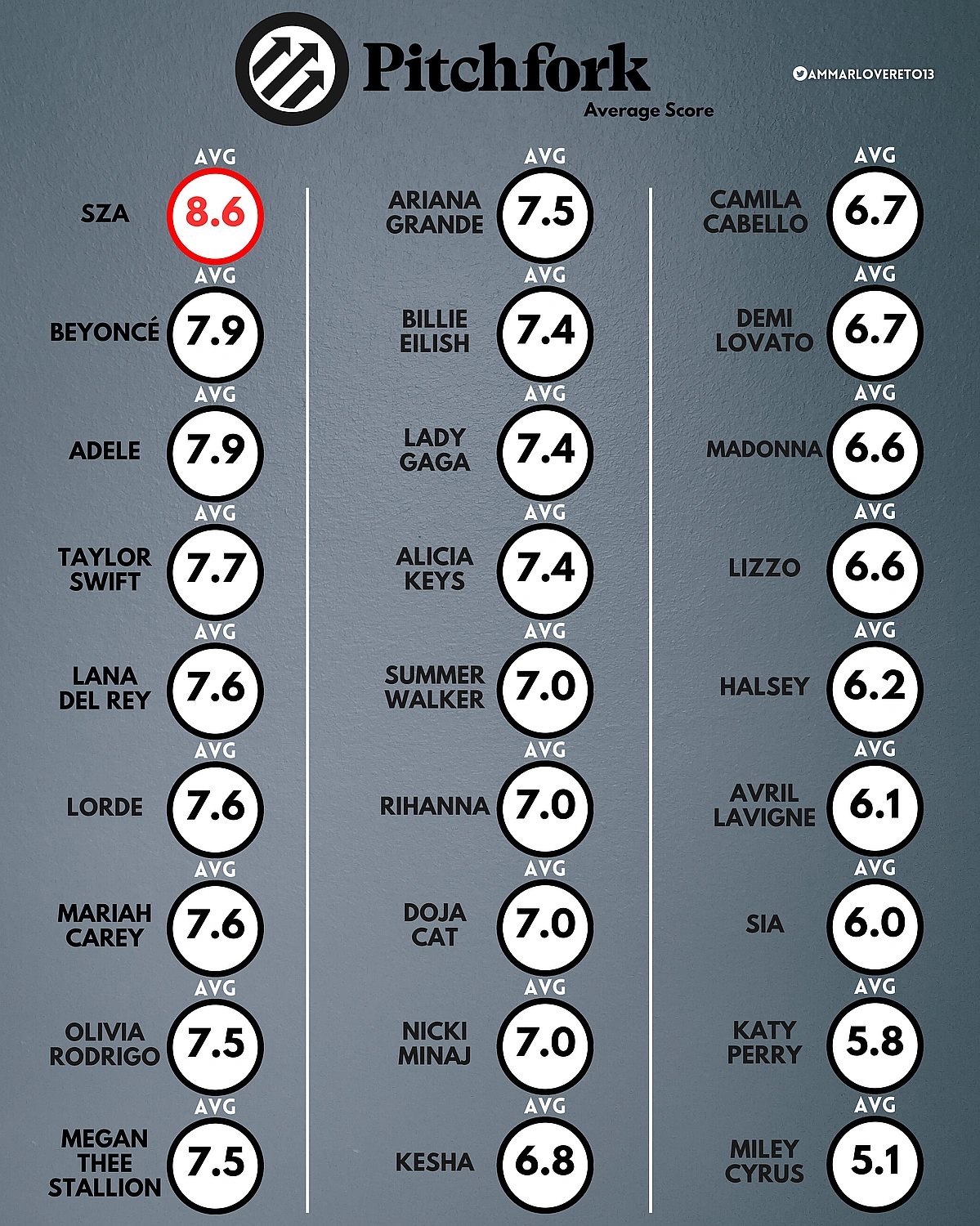
Pitchfork’s most notorious blind spots are gendered. For years, some of its harshest reviews were directed at women artists, couched in dismissive or trivialising language. The clearest example is its takedown of Lana Del Rey’s Born to Die in 2012, treated as shallow posturing rather than cultural statement. That same suspicion of “manufactured” femininity rarely appeared when male artists worked with equally constructed personas.
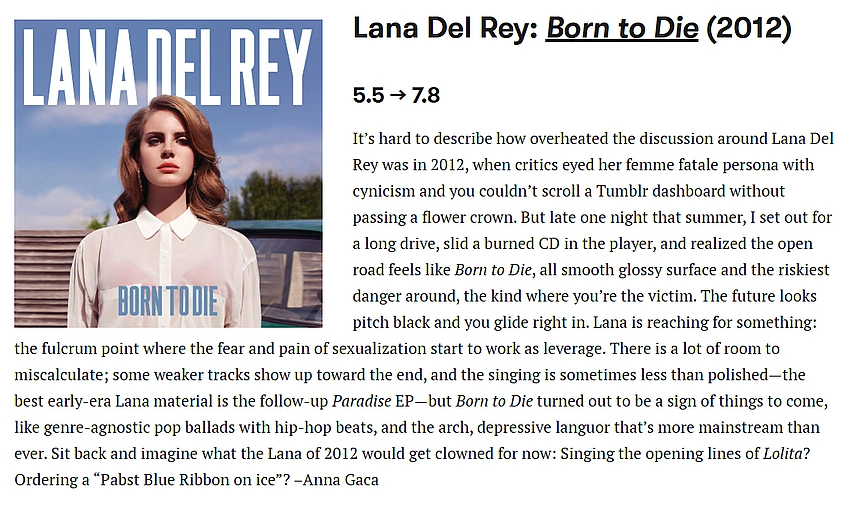
In recent years, Pitchfork has begun to revisit these misfires through its “rescoring” project, upgrading albums once written off. Born to Die was given a dramatically higher score, reflecting the cultural influence that was ignored the first time. Taylor Swift’s Reputation was likewise reappraised, with reviewers admitting the earlier critique was out of touch with both Swift’s artistic strategy and her role in reshaping pop stardom.
These reversals are not limited to women. Weezer’s Pinkerton was once branded an embarrassment before being re-evaluated as a flawed but essential classic. Radiohead’s Kid A, initially treated with cool detachment, was later recognised as epochal. The fact that Pitchfork now feels compelled to publicly correct its own record reveals how much cultural power it has accrued and how wrong it could be.
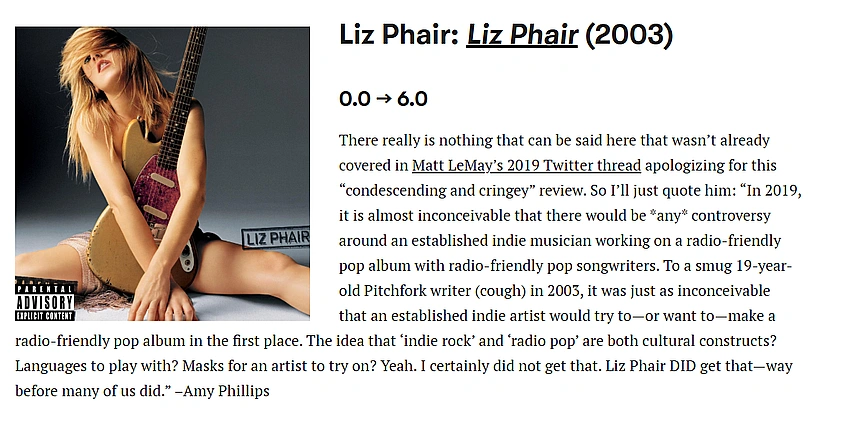
Reassessment is natural, even healthy, but the pattern reveals something deeper. Many of the most glaring early misjudgements reflect a bias against pop, glamour, and female self-presentation, framed against an indie canon coded as masculine and authentic. Pitchfork’s willingness to revise speaks to growth, but also to how exclusionary its early critical lens could be.
Why the Polarisation?
- Tone and Authority: Its style is unapologetic. When praising, it gushes; when critiquing, it excoriates. The decimal scoring made its verdicts harder, sharper, and more meme-able. In recent years, the site has avoided its most brutal scores, perhaps signalling a loss of nerve.
- Gatekeeping and Elitism: Pitchfork has been accused of privileging white male-dominated indie rock while neglecting hip hop, electronic and global music. Even as its coverage broadened, the suspicion of elitism stuck.
- Institutional Pressure and Evolution: Its absorption into GQ under Condé Nast alarmed many, suggesting its identity might dissolve into lifestyle content rather than stand as a critical voice.
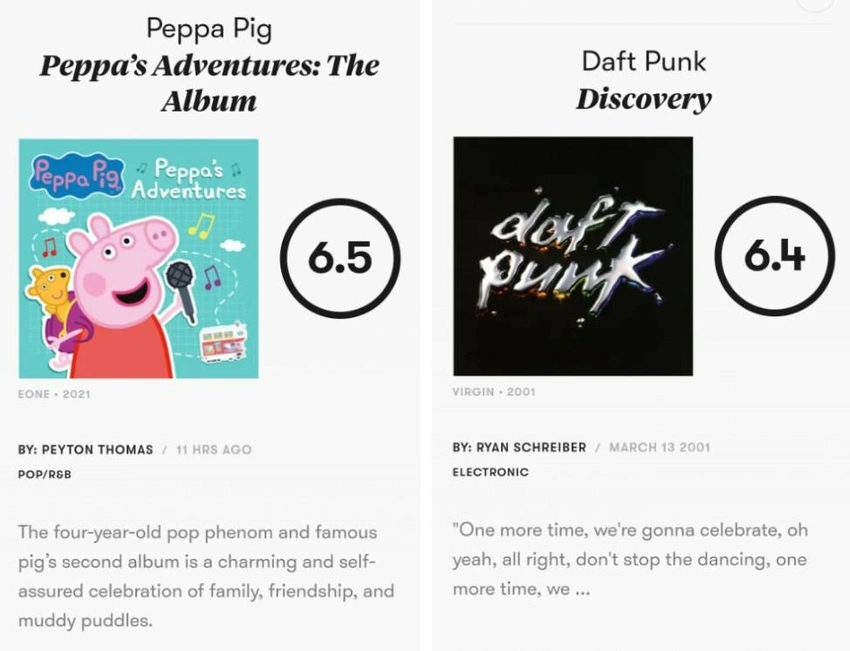
I admire Pitchfork when it takes risks, when it introduces overlooked records, and when its prose dares to be literary. But I bristle at its smugness, its gendered dismissals, its obsession with posturing. As a literature student, I value criticism as a dialogue, not a decree, and the rescoring saga proves that taste is provisional, contingent, and historical.
Pitchfork’s legacy may lie less in its scores than in its ability to dramatise the contradictions of criticism itself. To write about music is to risk being wrong, sometimes spectacularly. The question is whether one can admit those errors and grow. In this, at least, Pitchfork has begun to learn.
#PitchforkOrigins #MusicCriticism #IndieCulture #DecimalScore #MusicJournalism #CulturalMedia #Pitchfork #OpinionEssay #P4k #PopMusic #PopCulture #MusicReview
