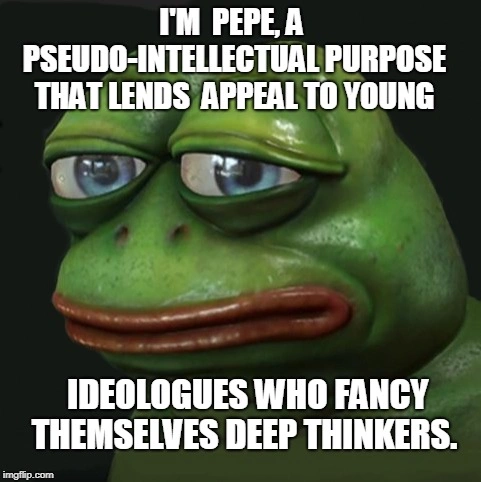
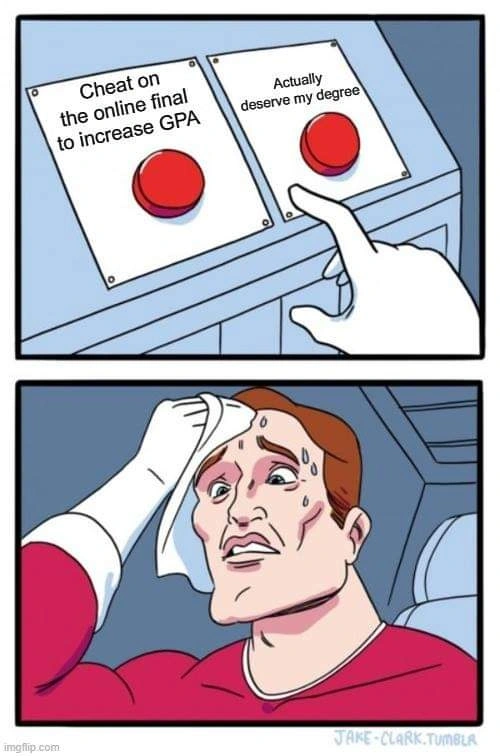
#CriticalThinking
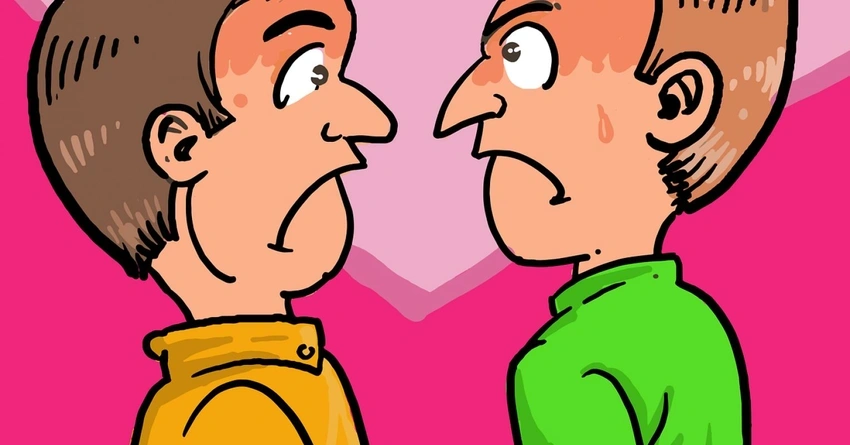
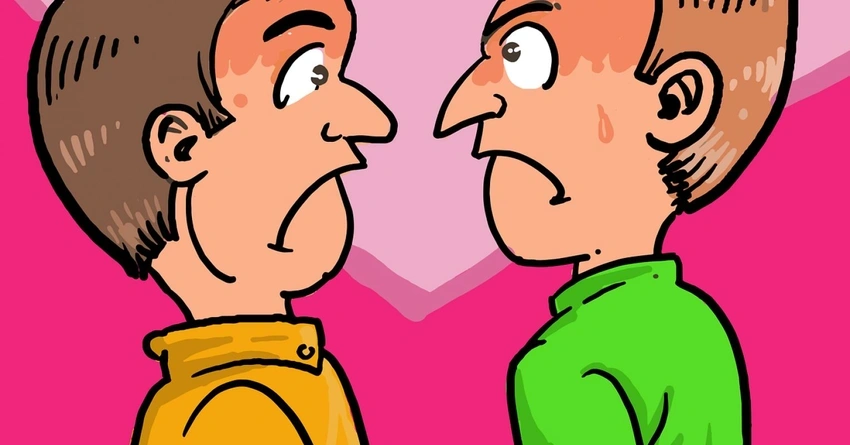
See through agendas: Everyone has an agenda—even the honest. Learn to discern your own path. #Discernment #CriticalThinking #Mindset
Login to reply.
14 Replies
Why Facts Aren't Enough: The Hidden Reason Science Debates Never End
Ever wonder why scientists can't agree on basic things? It turns out data is only half the story. Discover how our personal values quietly shape the …
Ever wonder why scientists can't agree on basic things? It turns out data is only half the story. Discover how our personal values quietly shape the world of science.
Why Facts Aren't Enough: The Hidden Reason Science Debates Never End
We like to think of science as a cold, hard machine. You feed it data, and it spits out an objective truth. If there is a disagreement, we assume we just need more studies or better equipment to settle the score. But have you noticed that some of the biggest scientific debates never actually end?
Whether we are talking about nutrition, mental health, or the origins of human behavior, the goalposts seem to move constantly. This happens because science is rarely a contest of pure data. Instead, it is a complex mix of evidence and human values.
The Myth of Pure Objectivity
The truth is that data does not speak for itself. It requires interpretation. When scientists look at a set of results, they are not just looking at numbers. They are looking at them through the lens of what they believe is important.
This is especially true in fields where testability is difficult. If you cannot perfectly replicate a scenario in a lab, you have to make assumptions. That is where values sneak in. A researcher's philosophical background, their views on ethics, or even their hopes for society can influence how they weigh one piece of evidence over another.
Why the Debate Persists
When a debate is fueled by values, adding more data is like throwing gasoline on a fire. Each side will simply find the specific data points that support their existing worldview. This is why we see experts with the same degrees and the same access to information coming to completely different conclusions.
It is not that the science is bad. It is that science is a human endeavor. We bring our biases, our priorities, and our dreams into the lab with us every single day.
How to Navigate the Noise
Recognizing the role of values does not mean we should stop trusting science. It means we should start asking better questions. Next time you see a heated scientific argument, ask yourself:
- What are the underlying assumptions here?
- Is this a disagreement about facts, or a disagreement about what matters most?
- How does this researcher's perspective influence their conclusion?
Science is a powerful tool, but it is not a magic wand. By understanding that values are part of the process, we can move past the frustration of endless debate and start having more honest conversations about what the data really tells us.
Login to comment.
7 Thots
More Like This
Why Facts Aren’t Enough: The Secret Reason Scientific Debates Never Die
Ever wonder why the smartest people still can't agree? It turns out that science isn't just about data, it's about our deepest values. Here is why th…
Ever wonder why the smartest people still can't agree? It turns out that science isn't just about data, it's about our deepest values. Here is why the debate never truly ends.
Ever wonder why we are still arguing about things that feel like they should have been settled years ago? We like to think of science as the ultimate referee. In our minds, a scientist walks into a room, drops a stack of papers on the table, and the debate is over. But if that were true, we would have reached a total consensus on public health, climate strategies, and nutrition long ago.
The truth is that science is rarely just about the numbers. It is a mix of hard evidence and deeply held human values. When we look at a scientific debate that never seems to end, we are usually looking at a clash of worldviews rather than just a disagreement over a spreadsheet.
The Value Gap
Data can tell us how a virus spreads or how a chemical reacts. However, data cannot tell us how much risk a society should be willing to take. It cannot tell us whether individual liberty is more important than collective safety. These are value judgments. When experts disagree, they are often using the same data but filtering it through different moral lenses. If you value economic stability above all else, you will interpret a data set differently than someone who values absolute risk prevention.
The Problem of Testability
Some ideas are much harder to test than others. In a controlled laboratory, we can isolate variables and get clean results. In the real world, where policy actually happens, things are incredibly messy. When a theory cannot be easily proven or disproven by a quick experiment, it leaves a massive amount of room for interpretation. People naturally tend to fill those gaps with what they already believe to be true.
What This Means for Public Policy
For those of us watching from the sidelines, this explains why public policy feels like a constant tug of war. If a policy is based on science that is also tied to values, there will never be a one hundred percent solution that makes everyone happy. Policy is not just the application of facts; it is the negotiation of priorities.
Instead of waiting for science to give us a single, perfect answer, we need to recognize that disagreement is part of the process. Understanding the difference between a data problem and a value problem could help us have much better conversations about our future. Science can give us the tools, but our values decide how we use them.
Login to comment.
8 Thots
More Like This
Playing Dress-Up with Ideas: The Rise of Pseudointellectualism
A literature student examines why flashy jargon often eclipses genuine analysis, exploring the line between sounding smart and thinking deeply.
Playing Dress-Up with Ideas: The Rise of Pseudointellectualism
A literature student examines why flashy jargon often eclipses genuine analysis, exploring the line between sounding smart and thinking deeply.
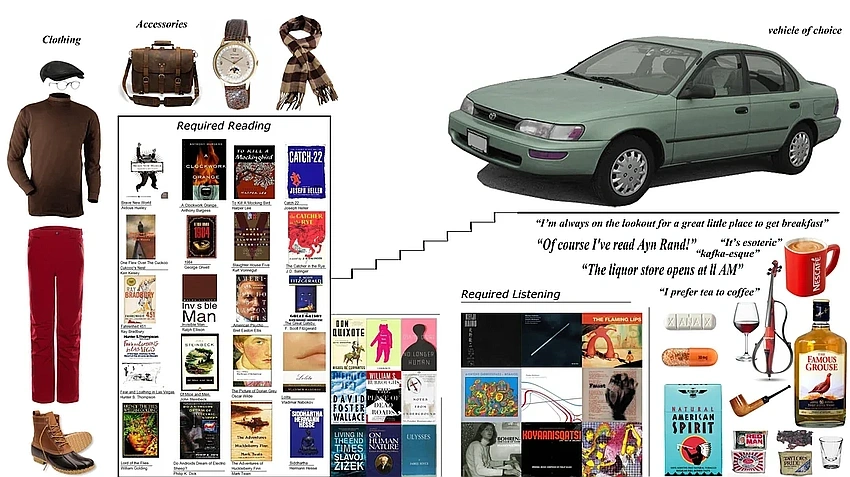
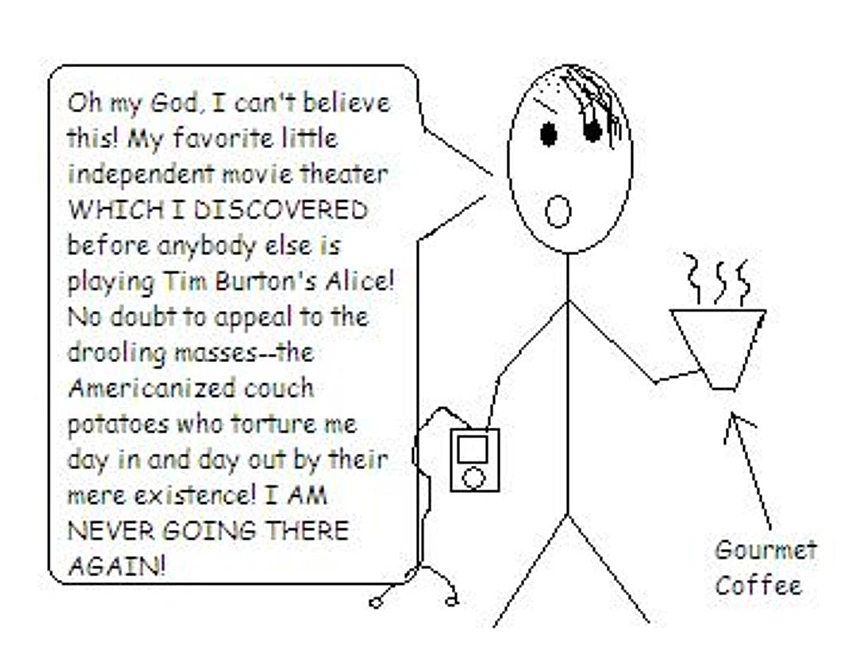
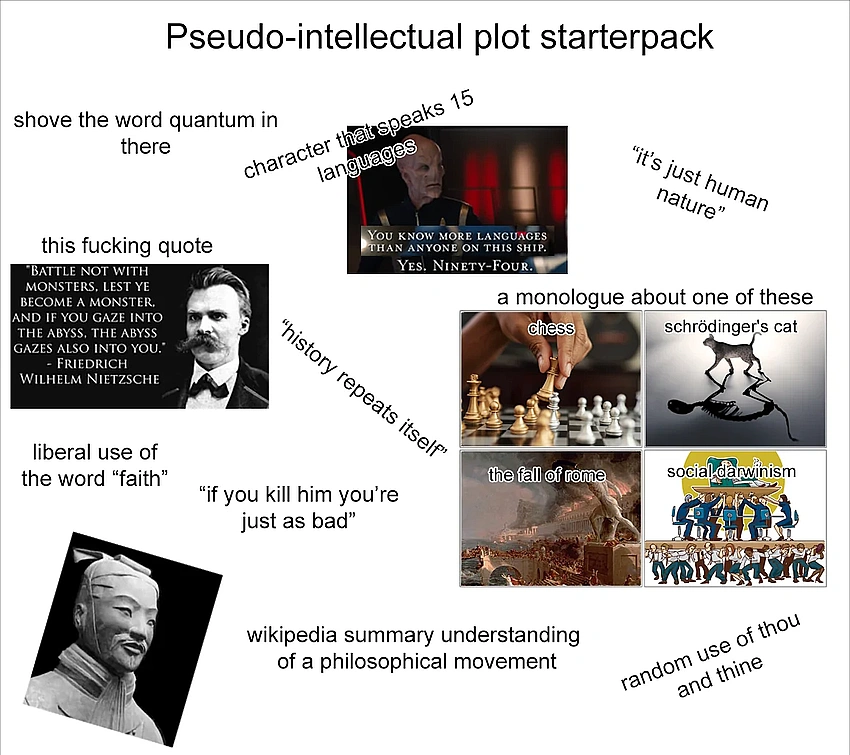
As a postgraduate literature student immersing myself in critical theory, textual nuance and the shifting terrain of academia, I’ve become increasingly aware of a curious phenomenon: the rise of what I’ll call pseudointellectualism. It is not simply a matter of people being ill-informed; rather, it is about the appearance of intellect overtaking its substance.
What do we mean by pseudointellectualism?
Let’s begin with a straightforward definition. The dictionary states that a pseudo-intellectual is “a person who wants to be thought of as having a lot of intelligence and knowledge but who is not really intelligent or knowledgeable.”

In other words, the emphasis lies on wanting to be perceived as smart rather than engaging deeply in intellectual inquiry. When I reflect on this, I think of someone who deploys a large vocabulary, drops references to continental theory or posts provocative statements, yet struggles to substantiate or interrogate the ideas they display.
At the core of pseudointellectualism lies two inter-linked dynamics:
(1) form over substance: the guise of intelligence becomes more important than actual understanding, and
(2) performance over process: the show of being intellectual replaces the slow, messy labour of thinking.

Why are we seeing more of it now?
Several cultural and institutional factors help explain the rise of pseudointellectualism. First, the digital era: with social media platforms emphasising quick takes, quotable lines and image over depth, the incentives shift in favour of sounding clever rather than being thoughtful. The medium rewards brevity, provocation and visibility more than measured reflection.
Second, the democratisation of knowledge means that access to vocabulary, theory, and “intellectual” signifiers is no longer the preserve of the traditional academic. That’s a good thing in many respects, but it also means that the markers of intellectual culture become more readily adoptable, even by those who haven’t engaged with its deeper rhythms. We focus on a person’s ability to create a stance and answer a question instead of the pursuit of the right question.

Third, in higher education and in popular discourse alike, the premium on appearing critical can overshadow actually being critical. The language of critique becomes a fashion rather than a method. In that sense, pseudointellectualism isn’t simply about ignorance; it is more about the misuse of intellectual tropes.
How does it manifest in everyday contexts?
From my vantage point as a literature student, I see several tell-tale signs of pseudointellectual behaviour that are worth flagging:
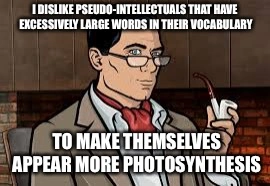
- Overuse of jargon without coherence: Using terms like “hegemonic discourse”, “epistemic violence”, or “post-colonial condition” as ornamentation rather than tools for argument. This is one of the points raised in a lifestyle piece identifying “They seek to impress, not inform”.
- Superficial engagement with texts: Quoting a theorist or dropping a canonical title but not delving into what is actually being argued. In short, name-dropping over exploration.
- Prioritising rhetorical effect over substance: Making bold assertions (“everything is a narrative”, “capitalism is dead”) without attending to complexity, historical context or counter-arguments.
- Elitism and showmanship: There’s a tendency to belittle differing viewpoints or to position oneself as the one who ‘gets it’, rather than engage genuinely with others. One letter to a newspaper argues that pseudo-intellectuals “may exhibit a sense of superiority or intellectual elitism over others, dismissing differing viewpoints as ignorant or uninformed.”
- Avoidance of uncertainty: Genuine intellectual work often involves admitting limits, ambiguity, or not knowing. Pseudointellectualism thrives on certainty and boldness — because those are more performative.

Why does it matter?
- It undermines genuine scholarship. If intellectual-posture becomes more valuable than intellectual-substance, then the culture of careful reading, questioning assumptions, and acknowledging complexity declines. That matters for literature, the humanities and beyond.
- It distorts public discourse. In media, politics or popular culture, pseudointellectualism can lead to simplified frameworks that present as insight but lack nuance. One commentator argues that journalism has been ruined by pseudo-intellectualism precisely because form overtakes fact.
- It deprives students of intellectual humility. As someone still in training, I find that the danger lies in feeling one already knows rather than being prepared to learn. In literature, especially, one must sit with texts, wrestle with ambiguity, and often revise one’s reading. The performance culture discourages that.
- It fosters a culture of noise over thought. If we reward loud positions, confident declarations and stylised critique, we may drown the quieter, slower work of reflection. In an age of attention economy, this is especially troubling.

What can we do about it in a student context?
Given these challenges, here are some modest reflections from my own practice that could help shift away from the pseudo-intellectual impulse:
- Ask “what don’t I know?” Before deploying a theory or a big word, pause to ask: do I really understand this? Am I using it because it clarifies or because it impresses?
- Engage with original texts rather than summaries or second-hand commentary. It is slower but builds depth.
- Cultivate intellectual humility: be prepared to say “I’m not sure”, “I don’t know”, or “I see multiple possibilities”. The performance of knowing everything is the hallmark of the pseudo-intellectual.
- Prioritise dialogue over monologue: genuinely listen to peers, critics, texts. If one is more interested in their own impressive remark than in what someone else is saying, that is a warning sign.
- Celebrate process, not just product: in literature seminars, we often focus on final essays and grades, but the real value lies in reading, rewriting, discussion, and uncertainty. Embrace that messy process.

The rise of pseudointellectualism is, at heart, a cultural shift: from thinking to appear to think, from depth to decoration, from questioning to declaration. As someone committed to literature and to intellectual work, I find this troubling because it must remain genuine. We need spaces in which complexity is honoured, curiosity is encouraged, and humility is valued.
If we can resist the lure of simply sounding smart, and instead lean into being thoughtful, then perhaps we can reclaim some of what has been lost in the glossier, louder version of intellect.
#Pseudointellectualism, #AcademicCritique, #LiteraryTheory, #HigherEducation, #CriticalThinking
Login to comment.
3 Thots
More Like This
When Memes Become Mini-Essays: Thinking Critically in Pictures
Explore how image-and-caption memes function as bite-sized essays, using irony and composition to provoke thought. Do memes argue, or simply entertai…
When Memes Become Mini-Essays: Thinking Critically in Pictures
Explore how image-and-caption memes function as bite-sized essays, using irony and composition to provoke thought. Do memes argue, or simply entertai…
Explore how image-and-caption memes function as bite-sized essays, using irony and composition to provoke thought. Do memes argue, or simply entertain our fast-moving attention spans?
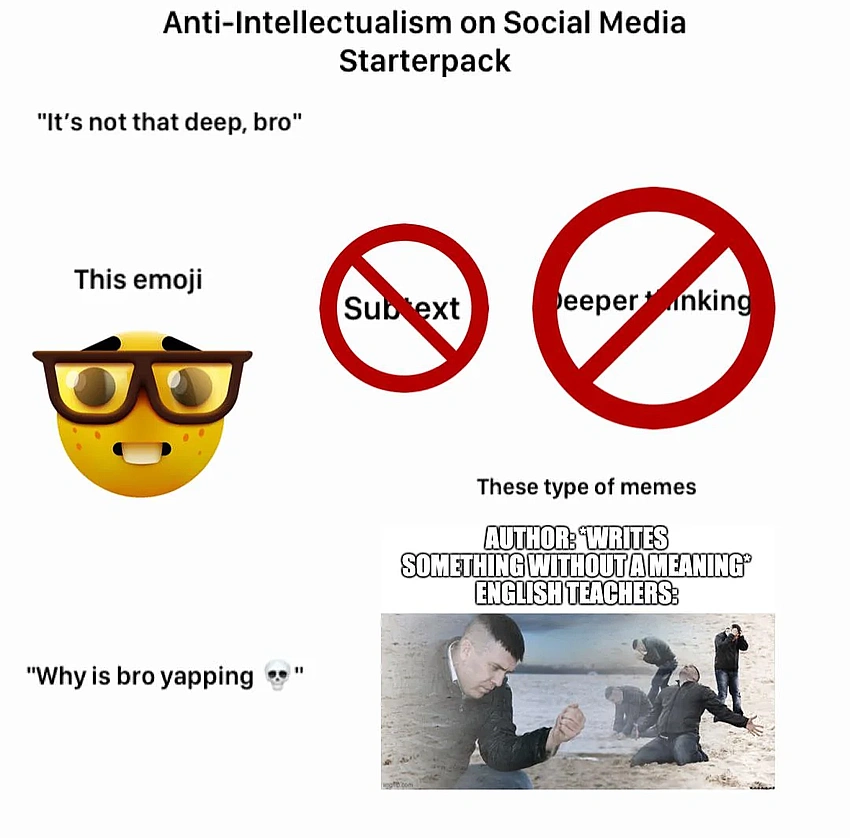
I’ve been reflecting lately on how the quick, viral image-plus-caption memes are less frivolous distractions and more like bite-sized essays. I find them endlessly fascinating: asking sharp questions, compressing argument and irony, demanding interpretive work, making snide remarks about structural faults; all in the space of a single image.
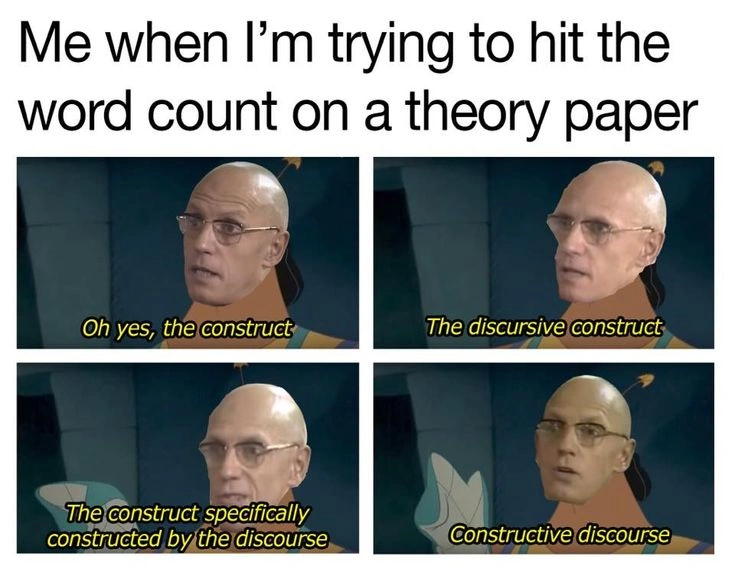
What makes a meme an essay?
At first glance, a meme seems lightweight, ephemeral, and humorous, which is the opposite of a serious academic essay. But if you slow down, you see complexity. A classic “image macro” meme pairs a carefully chosen photograph or still image with a caption that re-contextualises it, often ironically or satirically. That juxtaposition creates the kernel of an argument or a provocation: this image means something different if I say X about it.
Memes, in this sense, participate in what scholars call visual literacy or multimodal literacy: viewers are invited to “read” the image, notice what visual strategies are at play (angle, expression, framing, context), identify how the caption reframes meaning, and then judge whether the meme’s explicit or implied proposal holds up.
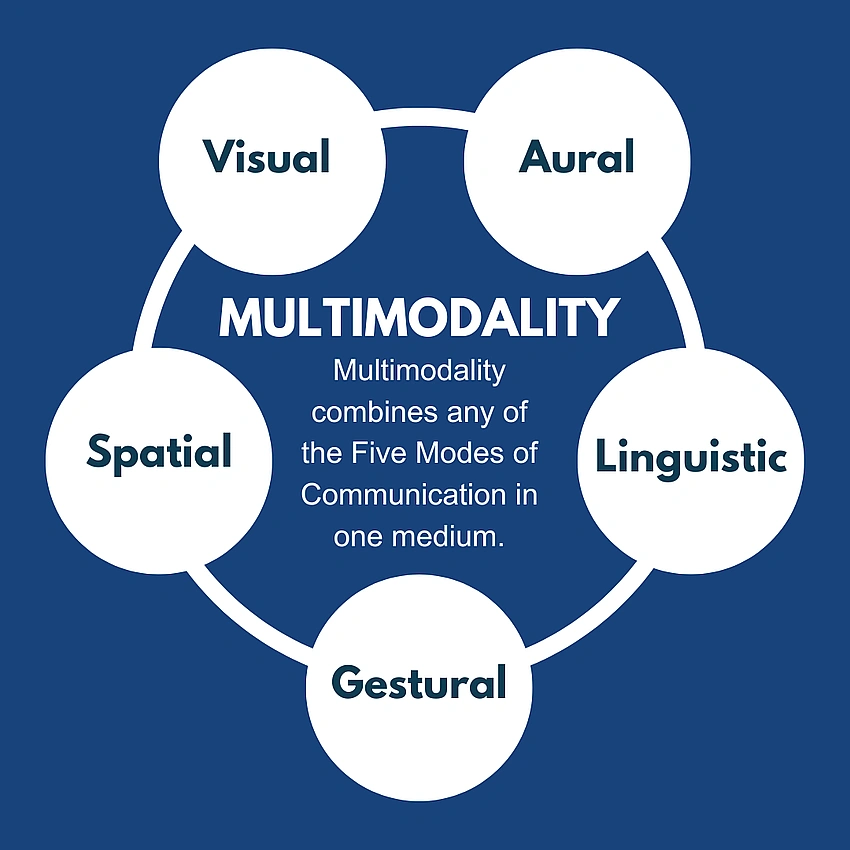
In educational research, there has been practical work on memes as tools for learning: students are asked to explain existing memes or even create their own to capture a concept taught in class. That task, it turns out, encourages the same moves good essays ask for: summarising, rephrasing, compressing complex ideas, choosing the right tone, and anticipating an audience.
Compressed argument, layered meaning
Because memes are so compressed, every element must carry weight. Take the “Distracted Boyfriend” meme: the image is a stock photo of a man turning away from his girlfriend to look at another woman. By relabelling the figures — say, “Me”, “My thesis topic”, “A vaguely interesting side note” the meme instantly dramatises conflict, temptation, and misdirected attention.
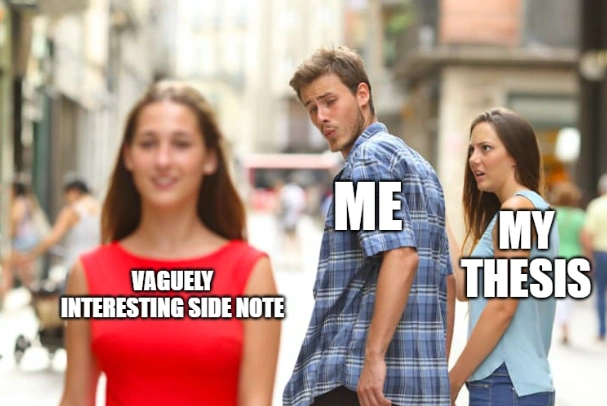
The humour comes not just from the incongruity, but from recognition: you’ve felt tempted by tangential ideas when you should have stayed focused. That emotional recognition, plus the satirical edge, does the work of a short essay: it identifies a problem, dramatises a tension, and nudges the viewer to reflect on their own behaviour.
That mental work of spotting the irony, imagining the missing premise, and recognising the absurdity is precisely what critical thinking students are trained to do. A meme is like a short prompt: spot the assumption, test the logic, respond (perhaps by laughing, or by creating a counter-meme).

Memes in the classroom: a pedagogical experiment
Several studies have shown that memes can actually enhance learning, especially when students are asked to analyse or create them. A recent investigation into university social-science courses reported that meme-creation assignments increased student engagement, encouraged active learning, and helped students internalise abstract concepts by translating them into cultural references.
There are two powerful pedagogical moves here:
- Explain a meme: students unpack how the visual and textual elements interact, what assumptions are being made, whether the logic holds, and what alternative framings might exist.
- Create a meme: students practice compression and visual-textual rhetoric, forcing them to choose a core idea, find or imagine a visual metaphor, and combine both in a punchy, shareable form.
When done reflexively with discussion about audience, tone, and possible misinterpretations, it becomes a serious thinking exercise, not a mere distraction.
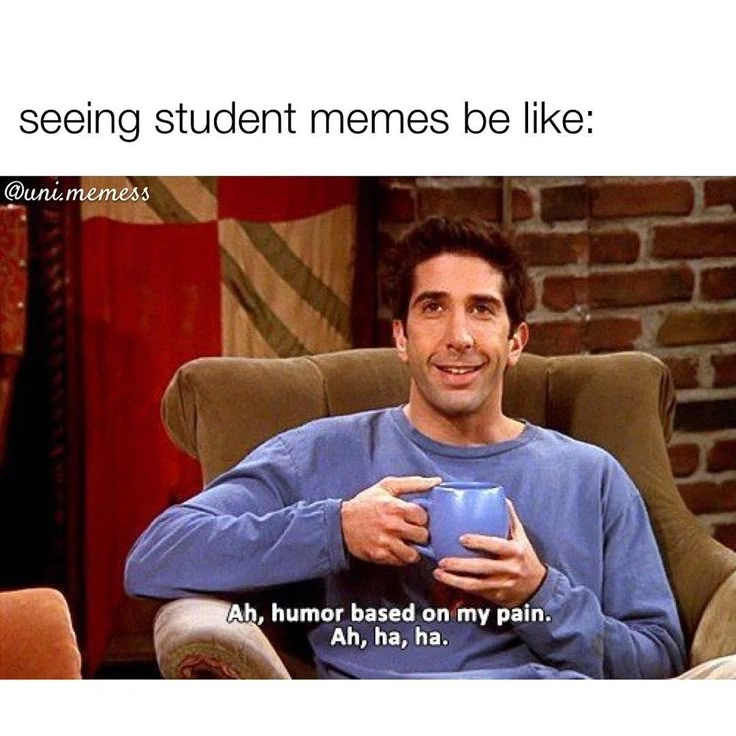
Critical literacy in a meme-saturated world
Memes don’t exist in a vacuum. They are circulating cultural artefacts, shaped by platforms, by community norms of humour and irony, and by the politics of shareability. They mutate, spread, and get remixed. Participating in meme culture, whether as consumer, sharer, or producer, demands meme-literacy: not just knowing humour or references, but recognising the underlying rhetoric and the implicit arguments.
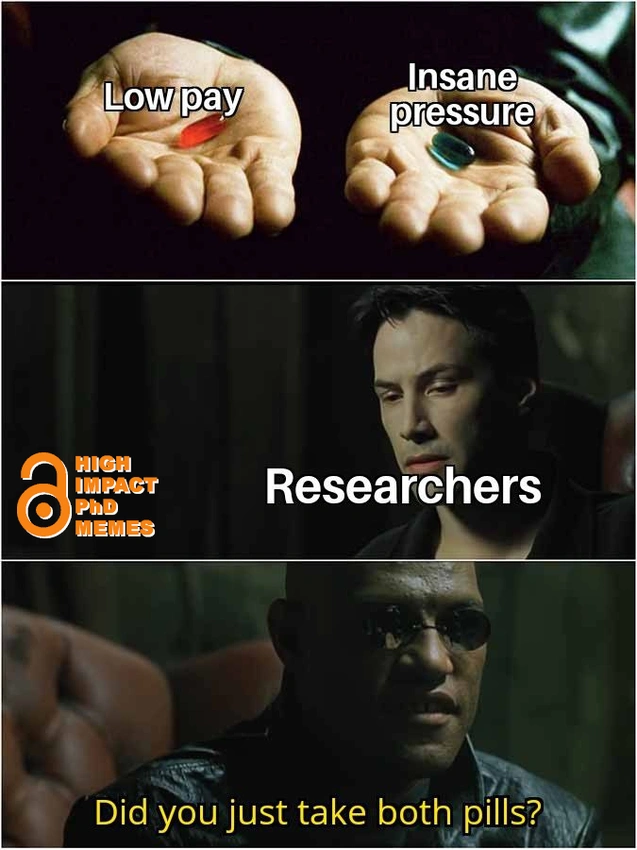
That literacy is crucial in our digitally mediated age, where image-text hybrids compete for our attention and shape public discourse. Memes can reinforce existing assumptions or subtly undercut them. They can simplify complex issues, but also provoke deeper reflection if the viewer brings a critical eye.
My reflections
As someone trained in literary criticism, I find memes a compelling new frontier. Literary criticism teaches us to slow-read: to notice diction, metaphor, framing, ambiguity, irony, and counterpoint. Memes demand a variant of slow-reading in the fast lane of social media: notice the visual cue, the incongruous caption, the emotional dissonance, the gap between what is shown and what is asserted, and then consider the implied critique.
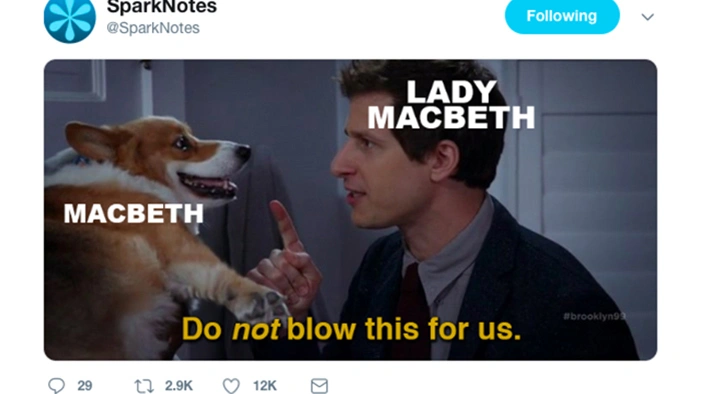
Creating even just a mock or provisional meme pushes me to think: what image would best represent this absurd idea? What caption would expose the flaw or highlight the irony? It’s a useful discipline in compression and wit, and it sharpens my ability to spot rhetorical sleight-of-hand in more traditional texts.
At times, I worry about the superficiality of memes. They can flatten nuance, reinforce stereotypes, or encourage lazy irony. But when approached thoughtfully, they can serve as stimulants to thought that spark a longer chain of reasoning or writing.
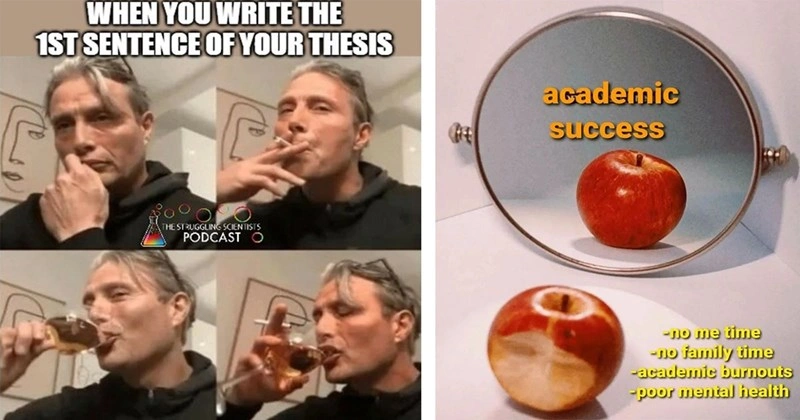
I suspect that part of the reason memes are so irresistible to our generation is that they already embody the hybrid literacy of today’s world: image-text, fast-moving, often ironic, and socially embedded. If we can treat them not as distractions but as rhetorical artefacts, then we open up a new mode of critical thinking for a digital generation.
In asking the viewer to spot assumptions, decipher the twist, respond with irony or counter-framing, memes engage the same faculties we use when reading Shakespeare, analysing poetry, or tracing modernist fragmentation, but faster, flashier, and more public. While I don’t see memes replacing essays, I do see them as useful companions. Thinking critically in image form is a real skill and one well worth cultivating.
#MemeLiteracy #VisualLiteracy #MemeCulture #MediaStudies #CriticalThinking #GenZ #Culture #PopCulture #InternetHistory
Login to comment.
4 Thots
More Like This
Comments
-
Loading...
-
-
-
-
-
-
-
Please select a valid reason.
Login to comment.