The Avalanches’ No Bad Memories: Selling Us Back Our Childhoods


The Avalanches’ No Bad Memories: Selling Us Back Our Childhoods
The Avalanches’ No Bad Memories: Selling Us Back Our Childhoods
The Avalanches build euphoric dance music around jingles, computer sounds and advertising voiceovers on ‘No Bad Memories’—a 31-track album that turns consumer culture into a source of nostalgia.
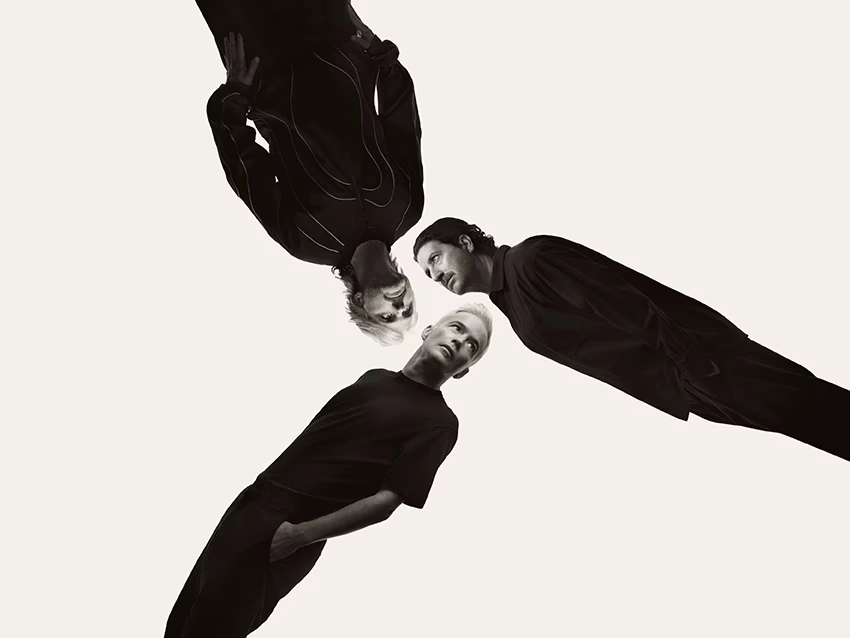
It is quite funny to hear the name Toshiba interrupt a dance track just as it reaches its climax. On ‘Together’, The Avalanches build towards an enormous, euphoric release, only to interrupt the moment with a corporate audio reference before allowing the music to continue. It is an absurd little joke, but it also gets to the heart of No Bad Memories. The Australian trio have taken the sounds of advertising, branding and early digital technology and made them the raw material for a record that is as much about consumer culture as it is about nostalgia.
Their fourth studio album, released on 16 October 2026, comprises 31 tracks across 52 minutes. It is a dizzying collection of dance music, sample-based pop, electronic noise and vintage recordings. But unlike the warm, sun-drenched nostalgia often associated with their debut, Since I Left You, this record is fascinated by the commercial sounds that accompanied everyday life. Old jingles, computer noises, advertising voiceovers and corporate sound logos become part of its musical vocabulary.

The sounds we didn't know we remembered
Advertising occupies an odd position in popular culture. We rarely think of commercials as part of our personal histories, yet their jingles and slogans can remain in our heads long after the products themselves have disappeared. The Avalanches understand this almost involuntary relationship between sound and memory. Their samples do not always need to be recognisable to work. Sometimes, a familiar electronic chime or a fragment of an old voiceover is enough to evoke an entire period.
There is also a more uncomfortable idea underneath this nostalgia. These sounds belong to a time when mass media could create shared cultural experiences. The same television advertisements reached millions of households, giving people a common set of references. That kind of monoculture is increasingly difficult to imagine in an age of personalised algorithms and fragmented media consumption. No Bad Memories celebrates the strange familiarity of these commercial fragments while quietly drawing attention to the world that produced them.
A dance floor interrupted
Musically, the album is considerably more restless than its predecessors. ‘Every Single Weekend’, which originated as a collaboration for Jamie xx, pairs bright electronic melodies with a danceable rhythm, while its lyrics introduce the less glamorous subject of the cost of living. The contrast is amusing: a song that sounds like an invitation to forget your problems keeps reminding you that you probably cannot afford to.
Karen O's appearance on ‘Blue Shadows’ is another highlight. Her voice gives the track a wistful, almost haunted quality, sitting beautifully against its Italo-disco influences. ‘I Give Everything I Have 2 U’, featuring Loaded Honey, transforms an old soul recording by The Esquires into a buoyant house track, demonstrating the group's ability to make something entirely new from an existing musical fragment.
The collaborators also push the album into less familiar territory. Panda Bear appears on the strangely organic-sounding ‘Highfield’, while Tunisian footwork producer Khadija Al Hanafi contributes to several of its more adventurous electronic passages. On ‘The Pavements Light’, Haruomi Hosono brings a quieter, ambient-jazz sensibility to the closing stretch. The range is enormous, but the Avalanches' sampling technique gives these different musical worlds a common language.

When everything becomes an advertisement
The album's interruptions are worth considering beyond their novelty. Its short sketches and commercial fragments frequently cut into the music just as a song begins to establish its own momentum. On ‘Together’, the interruption is funny and effective. Elsewhere, the constant changes of direction can become frustrating. ‘SUV Heaven’ and ‘Unicorn Quest’ contribute more to the album's atmosphere than to its musical development, while ‘Vida’, featuring Erick the Architect, feels somewhat disconnected from the surrounding material.
Yet I am not entirely convinced that these interruptions should be treated as flaws. The album is deliberately constructed like a broadcast that keeps changing channels. Its structure recreates the experience of being surrounded by competing sounds, slogans and images, rarely allowing one thing to hold our attention for too long. Even its excess has a cultural logic. We live in a media environment where everything is trying to sell us something, and The Avalanches turn that noise into the album's organising principle.

The melancholy behind the noise
What makes No Bad Memories more than an elaborate exercise in sampling is the melancholy that occasionally emerges from its exuberance. ‘One More Fantasy’ and ‘The Pavements Light’ are especially affecting because they allow the record to move away from its relentless stream of electronic interruptions. The latter, in particular, feels like the lights coming on after an unusually long night.
I find the album's central idea more interesting than a straightforward celebration of nostalgia. The Avalanches are recovering sounds from a media culture that has largely disappeared, but they are also questioning whether those sounds can mean the same thing to listeners who no longer share the experiences attached to them.
#TheAvalanches #NoBadMemories #ElectronicMusic #AlbumReview #Music

















Login to comment.