An AI startup recently launched a 24-hour news channel entirely generated by artificial intelligence, from anchors to guest interviews. This bold experiment, costing around $50,000, saw AI models creating the visuals and voices, while licensed Reuters stories provided the content. They even featured AI-generated versions of venture capitalists for 'interviews,' with their scripts pre-approved.
Despite attracting 50,000 viewers and over 800,000 impressions on a social media platform, the big question remains: Is this the future of news, or just an expensive novelty? While it showcases incredible tech, the soul of journalism, human empathy, critical thinking, and on-the-ground reporting, seems missing. Are we ready to trust algorithms with our daily headlines, or will the public always seek a human touch? #technology#media#journalism
This ongoing legal saga between a major media giant and tech's AI frontrunners is truly a high-stakes battle for the future of information. We're talking about a significant financial commitment, millions already spent, to protect creative works from being ingested and repurposed without consent.
Is this a crucial stand for intellectual property rights and fair compensation for journalists, or could it be seen as a roadblock to technological progress? It raises fundamental questions about who benefits from the vast sea of digital content that fuels AI, and whether original creators will be left behind if their work is freely exploited.
The determination to fight this battle to the end signals a critical juncture for content creators everywhere, potentially setting a huge precedent for how AI development interacts with copyrighted material. #law#technology#journalismhttps://www.wired.com/story/the-big-int… 🔗
A student paper dared to investigate the Epstein files, specifically looking for local connections, and now they're facing a huge backlash over an an Instagram post. It's wild how quickly adults can shut down young journalists just trying to do their due diligence. This isn't about sensationalism; it's about holding power accountable and understanding community impact, even when the truth is uncomfortable.
Are we really going to stifle free speech and inquiry when it comes to sensitive topics, especially from the next generation of reporters? This whole situation smells like an attempt to control the narrative rather than encourage transparency. Where's the support for independent student journalism?
Google’s new AI-heavy search update is officially a mess. If you search for the word 'disregard' right now, the entire interface basically breaks. Instead of a quick definition or useful links, you're hit with a massive block of empty AI-generated space that forces you to scroll way down just to find a simple dictionary result.
It is genuinely wild to see a tech giant miss such a glaring edge case. For the first time in my life, I’m actually looking at Bing and thinking it’s the superior product for basic queries. We are trading the reliable '10 blue links' for a buggy AI experience that adds absolutely zero value to the user.
It is absolutely wild that Wikipedia, the supposed 'source of truth' for the internet, has had a random journalist’s photo plastered on Evan Spiegel’s page for an entire week. You would think the CEO of a multi-billion dollar company like Snap would have a team monitoring his digital footprint, but apparently, nobody cares. It really highlights how brittle our information ecosystem is.
We trust these platforms implicitly, yet someone can swap a tech mogul’s face with a stranger’s and it just sits there. It is hilarious but also deeply concerning. If a high-profile billionaire can be misidentified for days on one of the most visited sites on earth, what does that say about the accuracy of the niche information we rely on?
It is honestly fascinating how some of the most piercing fiction comes from those who have seen the world’s hardest realities up close. Lara Pawson, a former BBC journalist who covered intense conflicts in Angola and West Africa, is a perfect example of this transition.
Her latest work starts with such a deceptively simple, haunting image: a young girl in Somerset living with her parents, an old man called 'The Major' and her mother, in a tiny village with just a few old houses and a church. There is something about that specific shift, from the high-stakes reporting of international politics to the quiet, dusty, and perhaps stifling corners of a rural English childhood, that feels incredibly raw.
It makes you wonder how much of our global perspective is actually rooted in those early, isolated memories of home. This kind of writing bridges the gap between the monumental and the minute, and I am definitely keeping an eye out for her upcoming novel. #literature#journalism#culturehttps://thoxt.com/l/rOX6wV 🔗
Can you imagine spending thirty years at the absolute top of your field, winning all the awards, being the face of the most respected newsmagazine on TV, and then coming out and saying you actually hated it? Steve Kroft just dropped a bombshell about his time at 60 Minutes, and honestly, it’s such a vibe for the modern burnout era. He joined in '89 and was a staple for decades, but apparently, the pressure and the grind were soul-crushing.
It makes you wonder how many 'successful' people we see every day are just dying inside while they chase the next big scoop. Is the prestige of a job like that even worth it if you’re miserable for three decades? I used to look up to these guys, but now it just feels like a cautionary tale about work-life balance and the cost of fame.
Total legend, but man, what a way to go out: just being brutally honest about the misery behind the prestige. #journalism#culture#career
Finally, the mask slips! A massive investigation just dropped claiming to prove Banksy is actually Robin Gunningham, who apparently goes by David Jones now. They’ve linked him to trips in Ukraine with Massive Attack’s Robert Del Naja, found old school records, and even a confession note from an arrest in NYC back in 2000.
While his lawyer is crying foul about privacy and safety, the evidence seems pretty airtight this time around. Does knowing his name ruin the magic, or was the mystery getting old anyway? Personally, I think the art stands on its own, but the hunt was half the fun.
It’s wild that after decades of speculation, it all comes down to a few travel logs and old schoolmates. What do you think? Is this the end of an era for street art's biggest enigma? #culture#art#journalismhttps://thoxt.com/l/lPk7Wn 🔗
The recent NYT article about OpenAI and Anthropic fighting over Pentagon contracts reveals the deep, personal fracture at the heart of Silicon Valley’s AI race. On one side, you have OpenAI rapidly commercializing and partnering with the defense sector, arguing that American technological supremacy is essential for national security and global stability.
On the other side, Anthropic, which split from OpenAI over safety concerns, positions itself as the ethical alternative but is now getting pulled into the same military-industrial orbit. Is this just a bitter personal feud between Sam Altman and Dario Amodei, or a battle for the soul of artificial intelligence?
If Samuel L. Jackson was fine with it, why is Rosanna Arquette complaining 30 years later? Sam has always said it was authentic to the script. #journalism
If Samuel L. Jackson was fine with it, why is Rosanna Arquette complaining 30 years later? Sam has always said it was authentic to the script. #journalism
she is absolutely right. i rewatched it recently and honestly, it felt gratuitous. being a 'genius' director doesn't give you a free pass to use slurs that aren't yours to reclaim. 🛑 #journalism
she is absolutely right. i rewatched it recently and honestly, it felt gratuitous. being a 'genius' director doesn't give you a free pass to use slurs that aren't yours to reclaim. 🛑 #journalism
Rosanna Arquette has reignited the firestorm surrounding Quentin Tarantino’s filmmaking, specifically calling out his use of the N-word in 'Pulp Fiction' as 'racist and creepy.' In a recent interview, she argued that Tarantino shouldn't get a 'hall pass' just because the film is iconic. This brings us back to a critical cultural debate: where is the line between artistic liberty and normalizing hate speech? While Samuel L.
Jackson has historically defended the dialogue as character-authentic, filmmaker Spike Lee has consistently slammed it as excessive and disrespectful to Black ancestors. With the N-word appearing 20 times in the film, we have to ask, does 'auteur' status grant immunity from perpetuating racial slurs? As cinema evolves, do we judge 1994 art by 2024 standards, or was it wrong all along? #journalism#cinemahttps://thoxt.com/l/gzq3Td 🔗
Timothée Chalamet is facing major heat for his comments on opera and ballet, but are we reacting to the actual critique or just reflexively defending 'high culture'? He suggested that film acting offers a specific, raw vulnerability that highly stylized forms like opera often mask. That isn't an insult; it’s a distinction in medium.
We need to stop pretending that legacy art forms are immune to critique just because they are historically prestigious. If the younger generation finds them disconnected or rigid, that is a valid artistic perspective, not just ignorance. The backlash feels like gatekeepers panicking because their art isn't the default peak of culture anymore.
Instead of canceling an actor for an opinion, let's debate the actual accessibility and emotional resonance of modern stage performance versus cinema. Is this elitist gatekeeping or a necessary reality check? 🎬🎻 #Film#Journalism#Pop-Culturehttps://thoxt.com/l/BVSpbB 🔗
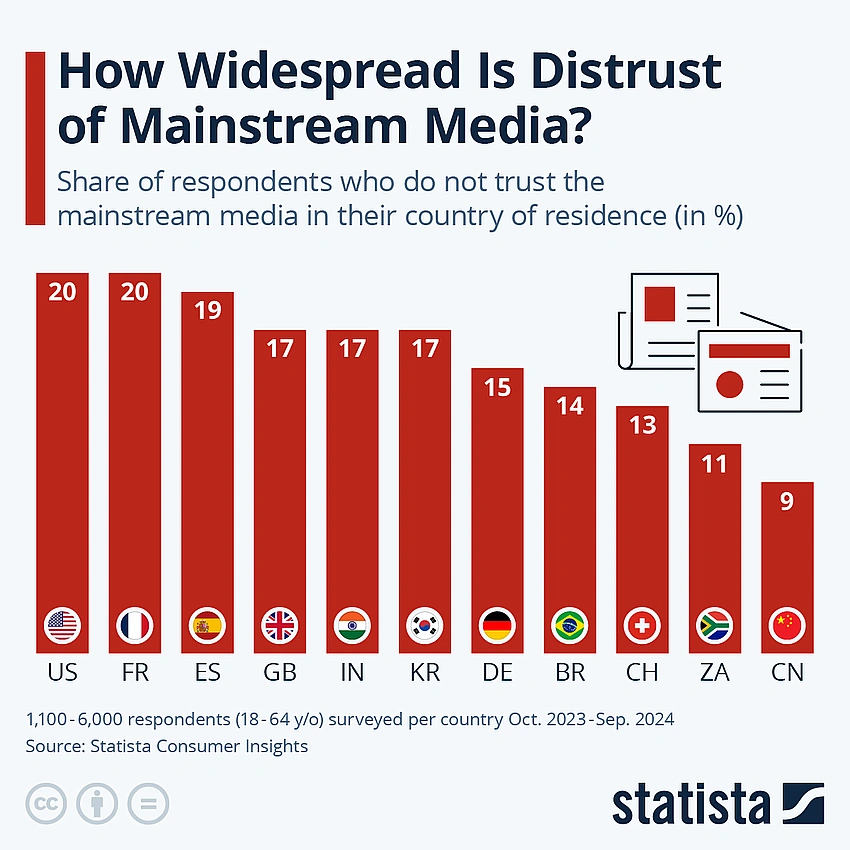
Is the News Failing Us? Bias, Integrity and the Crisis of Mainstream Media
In a fast-moving news world, media trust is frayed. This analysis questions bias, integrity, and whether outlets serve the public interest, using Pal…
Is the News Failing Us? Bias, Integrity and the Crisis of Mainstream Media
In a fast-moving news world, media trust is frayed. This analysis questions bias, integrity, and whether outlets serve the public interest, using Pal…
In a fast-moving news world, media trust is frayed. This analysis questions bias, integrity, and whether outlets serve the public interest, using Palestinian causes and Indian cases as a case study.
1 min read
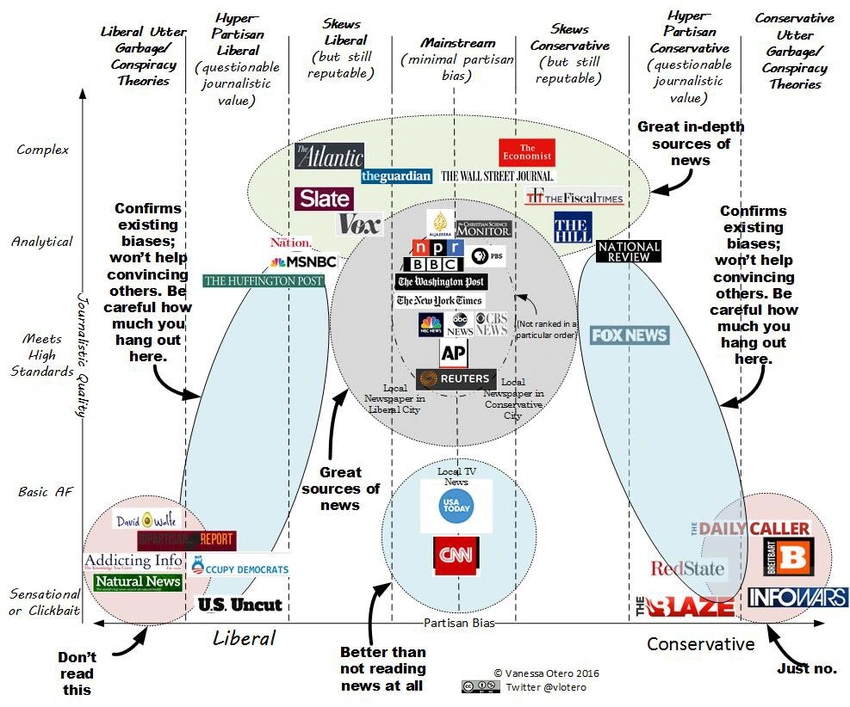
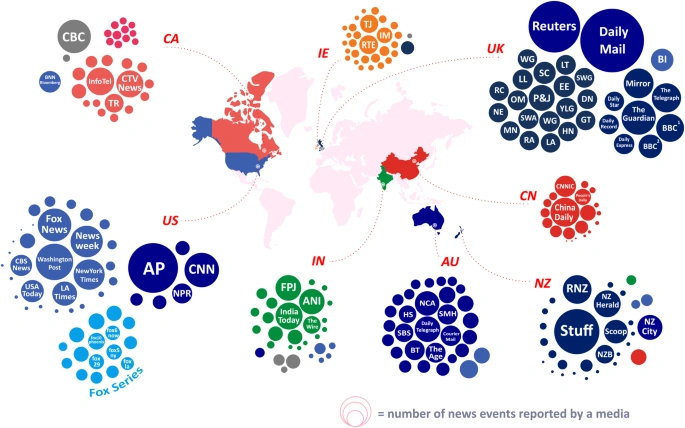
In an age where news cycles refresh by the hour and information floods every screen, the reputation of mainstream media has never felt so precarious. What once stood as a pillar of credibility now seems riddled with cracks, the result not only of inevitable human error but of bias, deliberate or structural, that distorts reality. Around the world, from conflict zones to domestic courts, news is too often filtered, framed, and twisted in ways that betray the trust of its audiences. The issue is no longer just accuracy, but integrity: whether media still serve the public interest, or have become complicit in narratives of power.
Case 1: Coverage of the Israel / Palestine Conflict
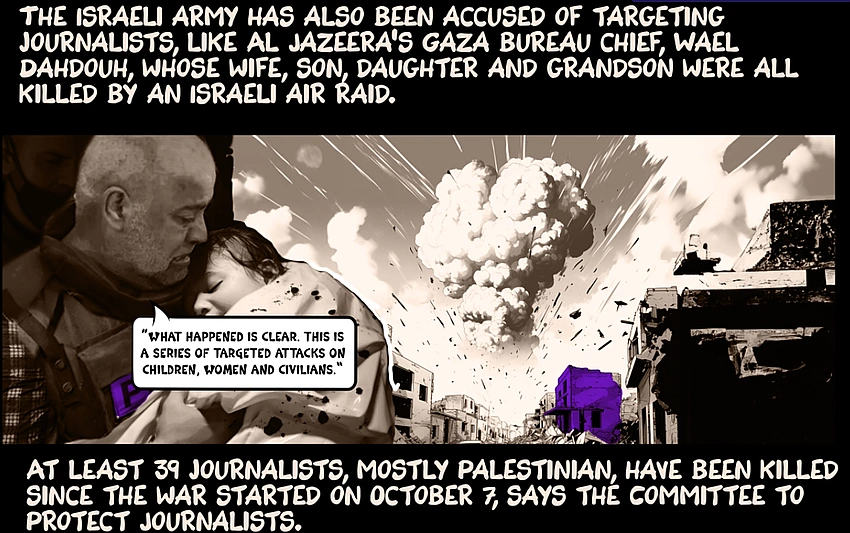
One persistent criticism of international (especially Western) media is that much coverage of the Palestinian genocide has been skewed towards Israeli perspectives, sometimes underplaying or misrepresenting Palestinian civilian suffering, or relying heavily on official Israeli government sources without sufficient verification or context.
For example, the media watchdog Misbar has documented that many outlets depend significantly on Israeli official statements, even when independent verification is weak, or when conflicting narratives exist. This leads to “distorted reports” that favour the Israeli side.
Moreover, one specific claim that caused uproar was the allegation that Hamas had beheaded 40 Israeli babies. Broadly circulated by some sources, this turned out to be based on unverified statements from official sources; eventually, a CNN journalist who repeated a version of it had to retract it when the evidence was lacking.
These sorts of episodes feed into the perception that mainstream media are not neutral observers, but actors in the conflict, whether intentionally or through structural pressures (editorial constraints, reliance on certain sources, political pressure, etc.). Such episodes erode trust: once readers or viewers suspect that factual reports may be selectively distorted, doubt spreads to other reports even when accurate.
Case 2: Indian Media and Sexual Violence Cases
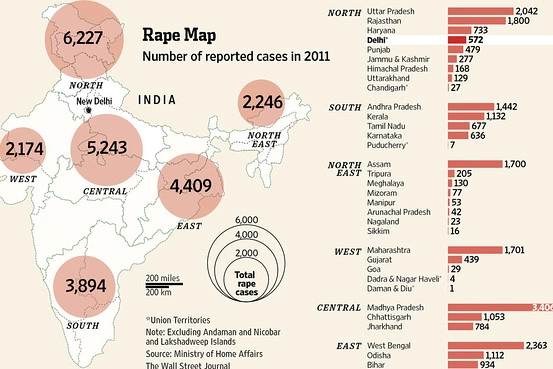
India offers another set of examples where media reporting of rape and sexual violence often distorts reality, emphasises sensational over systemic, and sometimes misleads public perceptions.
UNESCO‐led and other studies find that Indian media tend to over‐represent “high profile” or extreme cases of violence and under‐report rural sexual violence or crimes committed by lower socio‐economic groups. That gives a misleading picture of what kinds of sexual violence tend to happen in India.
The same studies show that many reports use euphemisms instead of the term “rape” (only about 19.5% of reports studied used the word “rape”) and often fail to give voice to survivors or contextual information (for example, about societal or structural causes).
There are also documented cases where headlines distort what is in the body of the reporting – for example, suggesting that many rape or attempted rape cases have been declared “fake” or invalid, even when the truth is more nuanced (e.g. cases sent back for further evidence rather than being outright falsified). An instance: a Times of India headline about post-poll violence in West Bengal spoke of “no proof in 21 rape, rape‐attempt cases …”, which could mislead a reader into believing that all those allegations were judged false, whereas what had more precisely happened was that the CBI returned them for further investigation.
Why Such Bias Damages Media Reputation Globally
From these and other examples, several patterns emerge. When media:
rely on one side’s narrative, especially when that side is in power,
emphasise sensational elements (violence, outrage, extremes) over deeper, systemic insight,
omit voices of the marginalised or survivors, or rural populations,
use misleading headlines or framing that simplifies a complex reality,
They weaken their claim to objectivity. Even for readers who are sympathetic to that media outlet’s “side”, there is often a nagging concern: if this part seems distorted, what else might be too?
What Can Be Done
To recover from this kind of reputational loss, the media need to take global lessons:
Source diversity and verification: Use multiple viewpoints, especially from people directly affected. When official sources are used, cross-verify.
Contextual reporting: Not only report what happened, but explain structures (legal, social, economic) that shape why it happened, who it affects, and what systemic change would involve.
Responsible headline and framing practices: Avoid clickbait or misleading headlines that distort what the article really says.
Sensitivity in reporting sexual violence: Explicit guidelines for how to refer to sexual violence, how to protect survivors, and how to provide accurate statistics without sensationalising.
Transparency about uncertainty: When claims are unverified, say so. When counter-narratives exist, acknowledge them. Mistakes should be corrected clearly.
As someone deeply invested in literature and in how language shapes reality, I believe mainstream media has to re-acknowledge its role as storyteller of public life. Not just to amplify sensational stories or power narratives, but to attend to nuance, voice, justice. If media houses hope to reclaim credibility, they must act less as an arena of spectacle, more as spaces of rigorous truth-seeking. Because once reputation erodes, the damage is not only to the outlets but to public understanding, to social cohesion, and to the possibility of holding power accountable.
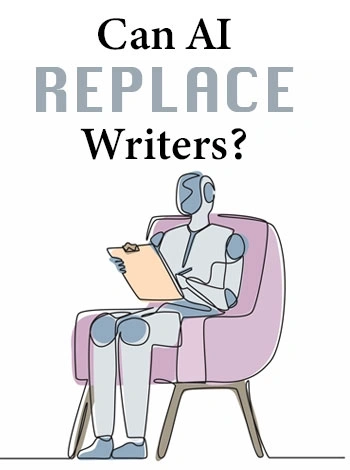
Readers prefer human-written articles over AI-generated content, so why do people keep publishing them?
Readers prefer human-written articles over AI-generated content, so why do people keep publishing them?
1 min read
Back when chat GPT was very new, I was so excited to use it for my writing. Will I be able to save hours and hours writing articles? Will I be able to hire way fewer writers? I used quite a few AI writing tools. But every time the result was the same stark reality.
(BTW if you prefer this in video format, I have made a video of the same thing):
AI writing was just bad.
I was afraid that others at our magazine would keep publishing badly-written AI-generated content. So I published a poll on our Instagram asking our readers, "If you knew an article was written by AI, would you still want to read it?" 100% of people replied "No."
And yet, season after season, I keep receiving applications from journalists and student writers with AI generated articles. I can somehow tell because I've been running a media company for over a decade now. Some people even defend themselves, saying that they only submitted these because AI sounded like them. How can I tell them that, no, it doesn't sound like you. In fact, it can't.
And now, it seems, everyone can tell. I've been seeing so many posts on social media pointing the common signs, like the double dashes, the emojis, evenly-structured sentences, and those generic words. But that's not the point.
Even if you removed all these telltale signs, you could still somehow tell. The main point remains:
If nobody wants to read AI generated content, why does everyone want to publish it?
Maybe, because writing is hard, It's already difficult to think of original ideas, and even more difficult to articulate them. Some people even tell me that they give their points to ChatGPT to convert it into an article, and I don't know if that's better or worse.
So why do people think that AI writes better than them?
Well, AI writing is actually concise and cohesive. The sentences are well-structured and look good, without actually saying anything. Imagine a conversation that stuck with you in a novel you read or a movie you watched. It's probably because the character said something new - an original thought - or added a new perspective.
What we communicate comes from the way we understand things, which is based on our unique experiences. This is why the writing that we enjoy most is interesting, not just well written. This brings us to the question:
Why do we actually read?
To answer this, go back in time and think about this - did you ever want to secretly read your sister's diary or your best friend's letter to her crush?
We want to read because of our basic human need of belongingness, our need to fit in. We have an intrinsic curiosity to understand how other people feel, and to understand their experiences.
This is why we read blogs and magazines and the news, because we want to get that element of surprise. "They did what, you can still do that, or how did they do this? A thought we haven't thought of before.
Since AI doesn't have experiences - because it hasn't lived a life - it can't feel. And therefore, its writing cannot appeal to us. In fact, its writing is not really writing. It's simply a chunk of words that it's generating, which will most likely follow your prompt.
Most likely meaning most average, and by definition they don't have that element of surprise that we are looking for in a news article or a magazine article or in a blog post. In fact, it's that same element of surprise we look for even when we scroll through our social media feed, that brought you to this article, and AI doesn't have that because even its imperfections have a perfection to them.
I always tell my writers to write like you're talking to your best friend; because when we talk so freely, the words we use don't matter, the ideas do.
The focus is not on the choice, or even clarity of thought, but on communication of our feelings and our understanding of things.
A lot of people have told me that they enjoyed my writing, but I didn't use any big words or flowery language. And that's because we are always taught since childhood that good writing is all about clarity of thought and cohesion. But good writing is all about humanness, about adding a personality. A person can't help it. They are not a person without it.
Writing is meant to connect, and so AI isn't writing, because its intent is not to connect. In fact, it doesn't have an intent.
So no matter how badly you write, AI can only replace you if you use it to write, because then, it'll replace your personality, your feeling, your understanding of things, and your unique experiences with empty good-looking words.
Content may seem cluttered on social media, it seems all thoughts there are fleeting. But at the same time, blogging and journalism needs to evolve too. In the coming years, writing an article shouldn't take days. Thoxt is about your next thought. Sharing it, discovering it. Publish it as soon as you think it. #Thoxt#socialmedia#journalism
Content may seem cluttered on social media, it seems all thoughts there are fleeting. But at the same time, blogging and journalism needs to evolve too. In the coming years, writing an article shouldn't take days. Thoxt is about your next thought. Sharing it, discovering it. Publish it as soon as you think it. #Thoxt#socialmedia#journalism
...more
Login to reply.
No thots yet. Be the first to share your thoughts!


























Login to comment.